Ultimate Guide to Motion Detection for Smart Home Security
Advanced motion detection technology enhances smart home security, saves energy, and delivers true hands-free convenience.
Blog posts

Arduino sketches are a fine way to build smart sensors if you...

Home Assistant YAML automations get hard to read past 30 lines. Once...
Shelly's first security camera is a 1080p box that records to a...
Products

IKEA MYGGSPRAY wireless motion sensor automatically controls lighting indoors and outdoors. Matter-compatible...

Dual-lens baby camera with 2K and 1080p lenses, 360 degree pan, 140...

mmWave radar sensor for multi-person tracking, posture detection and zone mapping over...

The Aqara Video Doorbell G4 provides smart video monitoring with two-way audio,...

The Ecovacs Deebot 601 assessed from published specifications and owner reports. Battery,...
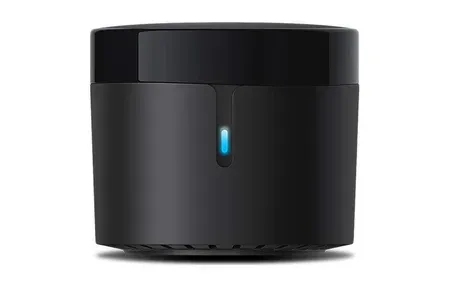
Wall Display X2 smart control panel with 6.95-inch touchscreen, 5A relay, environmental...

TP-Link Tapo C210 delivers 2K resolution, 360-degree pan and 114-degree tilt coverage,...
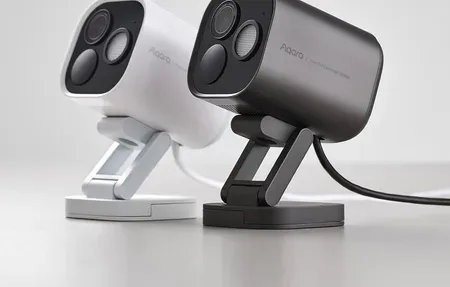
The Aqara Camera Hub G5 Pro packs a 2.6K outdoor camera, on-device...
Arlo Essential VMC2030: 1080p video, color night vision and a spotlight, no...
Arlo Go 2 VMC3050 is a 1080p HDR wire-free camera with LTE,...
Arlo Pro 4 VMC4050P delivers 2K HDR wire-free with color night vision...
This guide covers ecure your and how they enhance your smart home setup. Motion Detection has evolved from a simple security add‑on into a powerful engine that automates, protects, and streamlines the modern smart home. By sensing even the slightest movement, today's intelligent detectors can trigger lights, cameras, thermostats, and more-creating a living space that works for you instead of making you work for it.
By layering advanced analytics with edge processing, these smart sensors create an ultimate safety net that makes your home feel truly secure. The newest generation uses on‑device machine learning to filter out harmless background motion such as swaying curtains or a playful pet. This means you receive fewer nuisance pings and more actionable alerts. Complex multi‑sensor fusion-combining PIR, millimeter‑wave radar, and even ultrasonic pulses-lets a single device map movement in three dimensions and decide contextually whether to switch on lights, start a recording, or sound an alarm. Over‑the‑air updates continuously refine detection logic as manufacturers release upgrades for added accuracy.
Why Your Smart Home Needs Motion Detection
When paired with connected devices, motion sensors act as a silent steward that never sleeps. They instantly alert you to unexpected activity, illuminate dark areas before you step inside, and prevent energy waste by powering down idle appliances. This proactive approach not only boosts safety but also supports greener living through lower power consumption.
Core Advantages of Smart Motion Detection
- Real‑time security alerts delivered straight to your phone or smart display
- Hands‑free convenience as lights, music, or climate controls activate automatically
- Energy conservation by powering devices only when movement is present
- Customizable routines that match your family's daily rhythm
- Accessibility benefits for children, seniors, and anyone with limited mobility
Top Devices That Use Motion Detection
Smart Security Cameras: Your Watchful Guardians
Modern smart cameras use onboard AI to distinguish between pets, parcels, and potential intruders. The moment motion is spotted, recording starts and an alert is issued, giving you time to intervene or call for help. Some models even integrate two‑way audio so you can greet visitors-or warn off prowlers-from wherever you are.
Adaptive Smart Lighting Solutions
Replacing a standard bulb with a motion‑activated smart light instantly transforms hallways, garages, and outdoor paths. Sensors command the light to shine only when movement is detected, then fade when the area is empty. This creates a welcoming glow for late‑night arrivals while trimming electricity costs.
Smart Plugs That React to Movement
Plug anything-from fans to decorative lamps-into a motion‑aware smart plug, and it springs to life the moment you enter the room. These tiny adapters make legacy appliances part of your connected ecosystem without costly rewiring.
Begin your journey toward smarter home automation by implementing motion detection strategically. Whether you choose a single sensor for your hallway or deploy a comprehensive network across your property, the foundation remains the same: motion detection brings intelligence and responsiveness to your living space.
The beauty of modern motion detection lies in its ability to work invisibly in the background, making split-second decisions that enhance both security and convenience. Your home becomes more responsive, more efficient, and ultimately more aligned with how you actually live. As technology continues advancing, expect even more sophisticated capabilities, such as gesture recognition, occupancy analytics, and predictive automation that anticipates your needs before you realize them yourself.
Automating Your Home with Intelligent Motion Detection
Linking sensors to a smart home hub or platform such as Home Assistant, Amazon Alexa, or Google Home lets you craft routines that run themselves. Imagine a scenario where stepping through the front door disarms the alarm, switches on the foyer lights, and starts your favorite playlist-no phone taps required.
Quick Start Guide to Adding Motion Detection
- Select compatible sensors that match your existing ecosystem (Zigbee, Z‑Wave, Wi‑Fi, or Thread).
- Place sensors strategically near entry points, busy hallways, and high‑value areas.
- Integrate with your hub and name each sensor for easy identification.
- Build automation rules-for example, turn on porch lights at dusk when motion is detected.
- Test and refine sensitivity and timeout settings to minimize false triggers.
Final Thoughts: Improve Security and Efficiency with Motion Detection
Expanding your smart home with advanced Motion Detection also opens the door to richer automation possibilities that go beyond simple on-and-off triggers. As manufacturers continue to refine their algorithms, sensors become better at understanding context-such as whether someone is approaching a room or simply passing by. This nuance allows your system to decide whether to brighten lights fully, dim them for a softer glow, or keep them off to maintain nighttime comfort. It also supports smarter climate control, since Motion Detection can inform thermostats about occupancy patterns, reducing heating or cooling in rooms that sit unused for long periods.
Another growing advantage is the integration of Motion Detection with wearable devices and geofencing. When combined, these technologies can predict your arrival and prepare your living space before you step inside. For example, your entryway lights might activate when your smartwatch detects movement on the driveway, or your security system may shift into a ready mode as you approach the front door. This subtle layering of intelligence creates a smooth living experience that feels natural rather than scripted.
In multi‑person households, Motion Detection helps balance convenience and sustainability. Sensors can fine‑tune routines based on actual habits instead of static schedules, ensuring that your smart home evolves as your lifestyle changes. With thoughtful placement and occasional adjustments, Motion Detection becomes a long‑term foundation for safer, greener, and more responsive home automation. To push your setup even further, it helps to explore advanced routines that combine motion signals with time-of-day logic and environmental context. For instance, pairing Motion Detection with ambient light sensors enables your system to brighten spaces only when natural daylight is insufficient, preventing unnecessary illumination. You can also integrate occupancy-based rules that distinguish between brief motion events and sustained presence, which is invaluable for optimizing both comfort and energy savings. In larger homes, grouping multiple sensors can create smooth room‑to‑room transitions, allowing lights to flow naturally as you move. And as more devices adopt secure local processing, Motion Detection becomes faster and more private, keeping sensitive footage and detection data off remote servers. These innovations keep improving the responsiveness and reliability of your smart ecosystem, ensuring that Motion Detection remains one of the most impactful upgrades you can make. By experimenting with placement, tuning sensitivity settings, and refining automations over time, you can craft a living environment that anticipates your needs with remarkable precision.
As Motion Detection continues to evolve, its role in shaping a smarter household becomes even more meaningful. Emerging sensor technologies can soon recognize nuanced activity patterns such as slow movement, pet behavior, or even subtle posture changes. This opens opportunities for improved wellness monitoring and personalized comfort automation. Families can benefit from systems that adapt lighting or temperature based on daily routines without any manual input. These enhancements also ensure better energy efficiency across the home, supporting greener living without sacrificing comfort. With every upgrade, Motion Detection becomes a stronger ally in creating intuitive and secure smart environments.
As smart homes continue to mature, Motion Detection is also becoming an essential tool for deeper personalization and long‑term home management. Many manufacturers now explore combining motion signals with historical behavioral data, allowing systems to anticipate patterns with greater accuracy. For instance, your lighting system may learn that you usually enter the kitchen early in the morning, prompting a gentle illumination that matches the time of day and your preferred brightness level. Meanwhile, motion‑aware smart speakers can adapt notifications and announcements based on room occupancy, ensuring that alerts reach only the people who need them. For safety, Motion Detection adds meaningful value by helping to identify unusual activity in real time-such as prolonged inactivity in a child's room or unexpected movement in a restricted area. These insights empower families to respond quickly, improving both security and peace of mind. The broader trend toward local processing also enhances privacy, reducing reliance on cloud services and keeping sensitive motion data within your home network. As these innovations advance, Motion Detection will remain a cornerstone technology that supports a more adaptive, comfortable, and environmentally responsible living space.
Whether you are upgrading your security system, automating your lighting, or building a comprehensive smart home ecosystem, Motion Detection is an investment that delivers measurable benefits across safety, convenience, and energy efficiency. The technology is mature, affordable, and increasingly smooth to integrate with existing devices and platforms.
The evolution of Motion Detection from simple on-off triggers to sophisticated context-aware systems has transformed how homeowners approach security and automation. As these sensors become smarter and more affordable, they're becoming standard components in modern smart homes that truly anticipate and respond to occupancy.
Start exploring motion detection solutions today and discover how these intelligent sensors can transform your home into a responsive environment that enhances safety, comfort, and energy efficiency throughout every room.
The investment in motion detection technology pays dividends through reduced energy consumption, improved security awareness, and the fundamental shift toward a living space that anticipates your needs. As your smart home matures, motion detection becomes the connective tissue that unifies disparate devices into a cohesive, responsive ecosystem that genuinely improves daily life.
Begin your motion detection journey by evaluating your specific needs and priorities. Assess which areas of your home would benefit most from automation or security monitoring. Consider your existing smart home ecosystem and ensure motion sensors you select work with your hub or platform. Start small with one or two strategically placed sensors, test the automation rules, and gradually expand as you gain confidence and identify additional opportunities for improvement.
Start implementing motion detection in your home today and unlock the convenience and security benefits of this powerful technology. Motion sensors have become increasingly affordable and easy to install, making comprehensive home automation accessible to everyone. Whether you prioritize security, energy savings, or convenience, motion detection technology offers practical solutions that adapt to your lifestyle and improve your daily routines.
Motion detection represents a foundational technology that transforms how your home operates. As you explore these solutions and gradually build your smart home network, you'll discover that motion sensors create opportunities for meaningful automation that directly improves your daily experience.
Explore our comprehensive guides and product recommendations to find the perfect motion-detection solutions for your smart home setup. Discover how motion-detection technology can enhance your daily life while improving efficiency and convenience.
Enhance your home security with motion detection sensors that trigger alerts, automation, and intelligent responses.
Motion detection enables smart homes to respond automatically to occupancy changes through PIR, microwave, or camera-based sensors. Detecting movement, systems trigger lights, disarm alarms, and adjust thermostats without manual intervention. Advanced sensors distinguish between humans, pets, and inanimate objects, reducing false triggers. Geofencing combines motion detection with location data for intelligent home automation. Security applications use motion triggers for recording and notifications. Proper sensor placement maximizes detection coverage while minimizing false positives from pets or external movement. Modern motion sensors incorporate temperature readings, light levels, and occupancy duration data to enable context-aware automations. This multi-dimensional sensing approach allows sophisticated automations like triggering lights only when motion occurs in darkness or activating ventilation only when occupancy is detected during specific hours. Machine learning algorithms help systems learn normal movement patterns and distinguish unusual activity from routine motion.
The technology behind motion detection continues to advance at a rapid pace, with manufacturers incorporating increasingly sophisticated algorithms that can recognize individual behaviors and household patterns. These systems now understand the difference between a person walking through a room versus someone sitting still, between a pet moving around and a human presence, and even between normal movement patterns and potentially suspicious activity. This level of intelligence means fewer false alarms and more meaningful automations that genuinely improve your daily experience without creating frustration through constant notifications or unnecessary device activations.
When you invest in modern motion detection for your home, you're not just buying a sensor-you're gaining a fundamental component that transforms how your entire ecosystem operates. The ripple effects extend across lighting, climate control, security, entertainment, and energy management. Your home learns your patterns over time and becomes increasingly intuitive about what you need before you explicitly request it. This creates a living experience that feels responsive and intelligent rather than mechanical or scripted. The continuous evolution of this technology ensures that systems installed today will continue improving through software updates, keeping your investment relevant and capable for years to come. Whether you're focused on eliminating manual light switches, reducing energy consumption, securing your property, or simply creating a more convenient living environment, motion detection serves as the foundation that enables all of these goals simultaneously and easily.
Advanced motion detection algorithms continuously evolve through machine learning improvements that reduce false positives from environmental factors like swaying trees or passing vehicles. Customizable detection zones enable users to monitor specific areas while ignoring activity in regions where motion events are irrelevant or expected. Sensitivity adjustments accommodate different monitoring requirements, from highly responsive security applications detecting subtle movements to relaxed settings minimizing nuisance alerts in high-traffic areas. Integration with smart lighting systems creates automated illumination responses when motion is detected, enhancing both convenience and security through coordinated device behaviors.