Low-Power Thread Devices in Home Assistant: How Sleepy Sensors, Switches and Locks Actually Work

This post may contain affiliate links. As an Amazon Associate we earn from qualifying purchases. Disclosure.
Battery-powered Thread devices spend most of their lives asleep, and that single fact explains their battery life, their lag and most of the odd errors you'll see in Home Assistant. Here's how sleepy end devices, Matter's SIT and LIT modes and Thread 1.4 fit together, built from the specs and docs.
I don't own a single battery-powered Thread device yet. Nothing in this house sleeps on a Thread mesh, so this isn't a field report. It's research, the kind I wish I'd found in one place: the OpenThread primer, the Thread Group's 1.4 white paper, the CSA's Matter 1.4 announcement, Nordic's Matter low-power docs, the Home Assistant Thread and Matter pages, and the changelog of the Matter server Home Assistant runs on. Where I say "I", it's about my own build; everything else carries a link.
Why bother with an anchor page on something I haven't plugged in? Because the questions start before the hardware does. Which devices will lag? Which ones will throw errors that aren't errors? And what does any of it mean for a house that runs on Home Assistant?
Bottom line: A low-power Thread device is fast at nothing and good at one thing: sleeping. It wakes on its own schedule, asks its parent for mail, and goes back to sleep. Matter 1.4 added a longer sleep mode with a check-in so controllers know when to talk. Buy for that behaviour on purpose, put mains-powered devices in first, and read NoAck in the logs as normal.
What Makes a Thread Device "Low-Power"?
Its role in the mesh, more than its chip. The OpenThread primer splits devices into two families. A Full Thread Device always has its radio on. A Minimal Thread Device forwards every message to its parent and can only ever be an end device, a child hanging off someone else.
Inside that minimal family sits the distinction that matters for batteries. According to the OpenThread node roles guide, a Minimal End Device keeps its transceiver on and doesn't need to poll. A Sleepy End Device is "normally disabled" and "wakes on occasion to poll for messages from its parent." That's the whole trick. The radio is the expensive part, so the device keeps it off.
Who carries the mesh, then?
The always-on devices. The current primer calls them Mesh Extenders, the role older docs called routers. Its limits table gives one Leader, up to 32 Mesh Extenders and up to 511 end devices per Mesh Extender, and it says Thread tries to keep between 16 and 23 extenders active. Google's Thread help page uses the same language: always-on devices act as Mesh Extenders, while battery-powered ones sleep when idle so door locks and motion sensors can run for a very long time between battery changes.
So a battery sensor never extends your network. It leans on the nearest plug or bulb. That's the same rule that makes mains-powered bulbs the backbone of a Zigbee mesh, and it carries over unchanged. Our Thread setup guide turns it into a buying order: the backbone first, the sleepers second.
Photo by Jakub Zerdzicki on Unsplash
Minimal, sleepy and synchronized sleepy
There's a third flavour. Nordic's Matter low-power documentation names two low-power Thread device types: Sleepy End Devices and Synchronized Sleepy End Devices. The synchronized kind uses Coordinated Sampled Listening, or CSL. Instead of waking whenever it likes and asking for mail, it agrees a listening schedule with its parent, which then knows exactly when the device will be listening. The cost, per Nordic, is extra message exchanges with the parent every time that interval changes.
How Does a Sleeping Device Ever Hear a Command?
It doesn't hear it live. Its parent holds it. The Home Assistant Thread integration page spells this out in its troubleshooting notes. Battery devices "turn off their radio most of the time to conserve battery and only wake up periodically to check for messages," and "the border router queues messages and delivers them when the device wakes up."
That's why the same page says a NoAck, a message the device didn't acknowledge, is expected for sleepy end devices. I'd underline that sentence twice. A NoAck from a mains-powered plug is a lead. A NoAck from a door sensor is Tuesday.
What does that mean in practice? A command to a sleeping device lands when it next wakes, not when you tap the button. For a motion sensor, that's fine, because the sensor talks first: it wakes up the instant it sees movement and reports. For anything you control, a lock or a battery switch you want to reconfigure, the wake schedule sets the delay.
Thread 1.4 nudged this in the parent's favour. Among its mesh changes, the Thread 1.4 white paper lists prioritising CSL transmissions over indirect ones in the MAC layer, to cut latency for time-sensitive CSL traffic. In plain words: a synchronized sleeper's scheduled slot now jumps the queue.
What Did Matter Add on Top?
A vocabulary for sleep that controllers can rely on. Thread says how a device sleeps at the radio level; Matter says how long a controller should expect it to be unreachable. Nordic calls these Intermittently Connected Devices, or ICDs, and warns that "Matter ICD behave like Thread SED, but the two terms are not interchangeable."
Each ICD has two states in Nordic's description. In active mode it's reachable and answers in a timely way, polling at the fast interval. In idle mode it's unreachable for up to the Idle Mode Duration, and the fastest it can receive anything is the slow polling interval.
Short Idle Time vs Long Idle Time
The Matter specification divides ICDs in two, and Nordic gives the line: a slow polling interval of 15 seconds or less makes a Short Idle Time device, anything longer makes a Long Idle Time device. LIT devices, Nordic says, "are designed to be used for sensors or light switches," and they can sleep longer and draw much less power than SIT ones.
Sleeping that long creates a problem, though. How does a controller know when to send? The CSA's Matter 1.4 announcement, dated 7 November 2024, answered it with two things: the LIT protocol "which extends battery life" and "a new Check-In Protocol to ensure reliable communication for low-power devices that require LIT." The device announces itself to its registered controller instead of the controller guessing. Nordic notes Check-In is on by default for LIT devices.
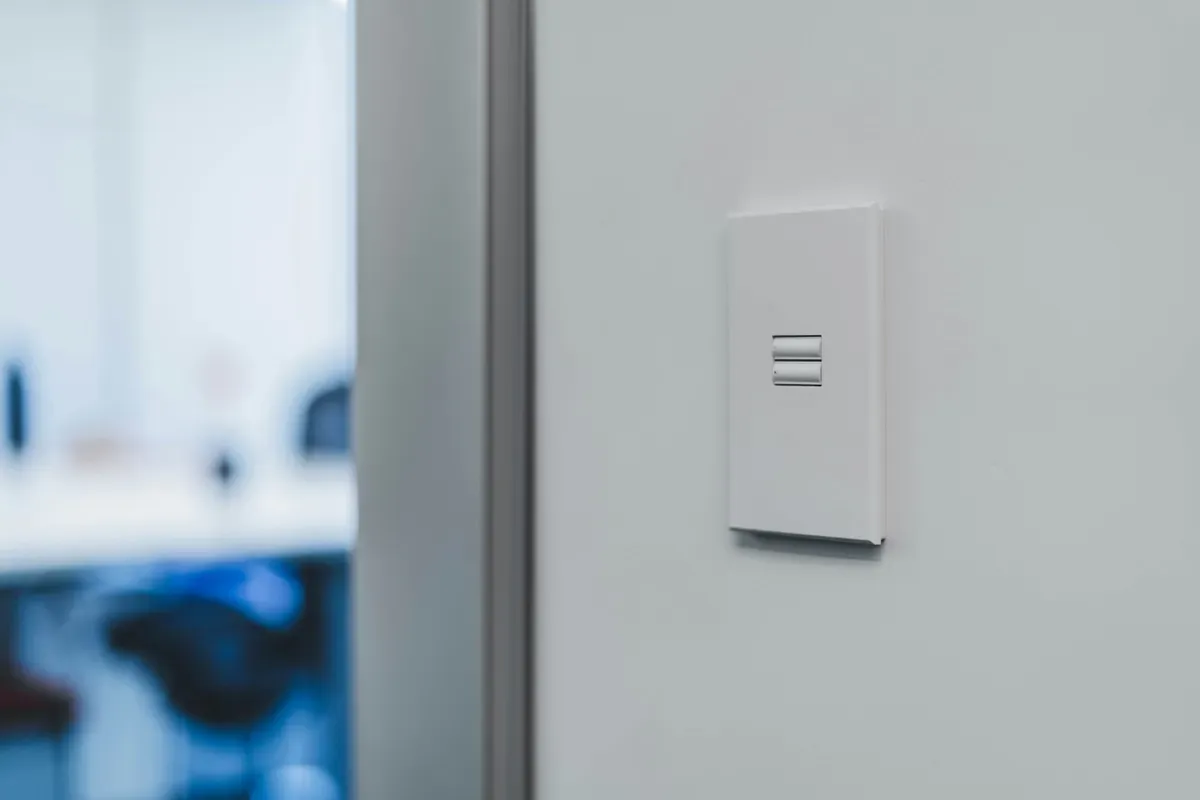
Photo by Erik Mclean on Unsplash
A sleepy Thread sensor isn't lagging. It's asleep on purpose, and every second you buy back comes out of the battery.
That's my opinion, and you may disagree with it: most complaints about "slow" battery Thread gear are complaints about a design decision working as intended. If a device has to answer in under a second, it shouldn't be on a battery.
Which Devices Suit a Low-Power Thread Role?
Anything that mostly reports and rarely gets told what to do. Here's how the roles above map onto real categories, using the docs cited on this page rather than any vendor's marketing.
| Device | Usual power | Typical Thread role | What sleep means for you |
|---|---|---|---|
| Smart plug, bulb, mains switch | Mains | Mesh Extender | Always reachable, carries the mesh |
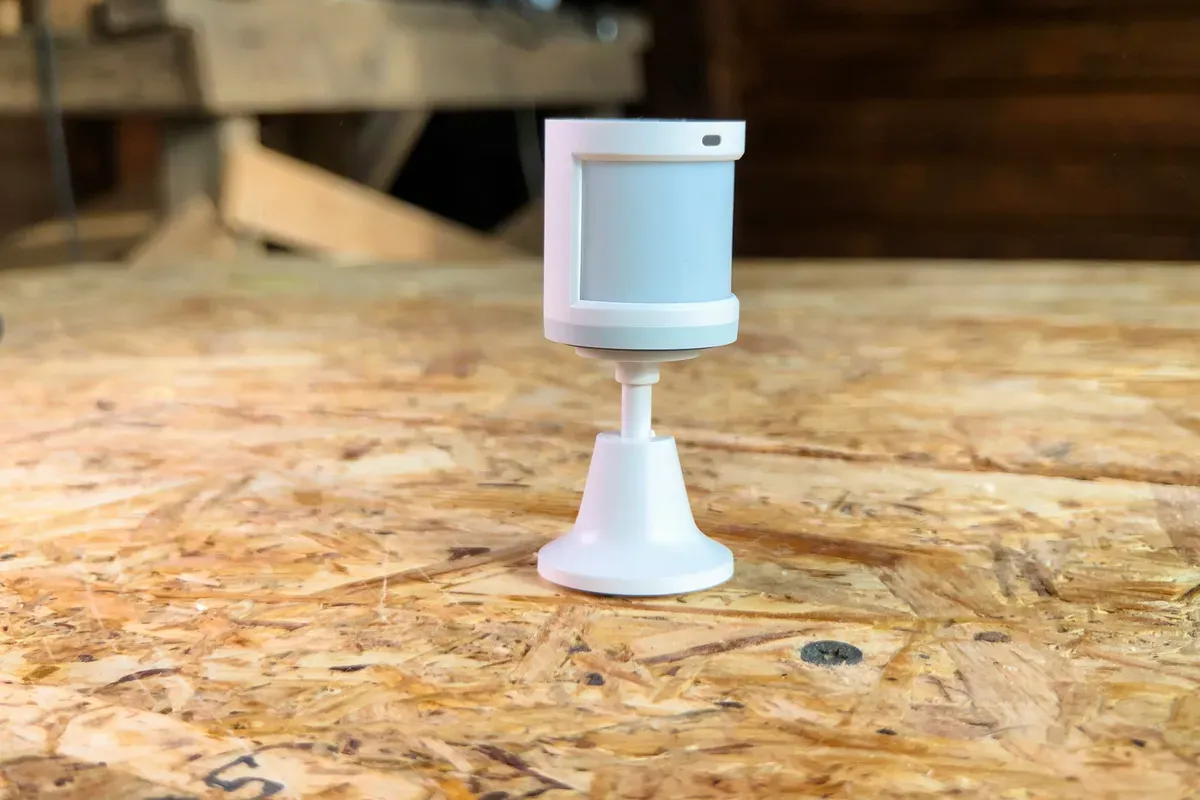
| Motion, contact, leak sensor | Battery | Sleepy end device, often LIT | Reports instantly, slow to accept settings |
| Battery wall button or switch | Battery | Sleepy end device, LIT per Nordic | Press is instant, configuration waits for a wake |
| Door lock | Battery | Sleepy end device | Remote commands wait for the next poll |
| Border router (hub, speaker, display) | Mains | Border router, can act as Mesh Extender | Holds queued messages for sleepers |
One concrete product shows what a spec sheet will and won't tell you. IKEA's MYGGSPRAY motion sensor page says it uses Matter over Thread, needs a Thread border router to be controlled from a phone, and recommends two LADDA HR03 AAA 1.2 V rechargeable cells, sold separately. The CSA certification listing shows it certified on 28 April 2026 against Matter specification version 1.4, over Thread and Bluetooth.
Matter 1.4 is the version that introduced LIT. Neither page says whether this sensor actually runs as a LIT device, and neither gives a battery life figure. That's the norm, not an IKEA quirk, so don't buy on the version number alone.
Locks are the category this page will grow into. Aliro handles the phone-to-door credential, and Matter handles remote lock and unlock, which on a Thread lock means a sleepy device waiting for its next poll. The Aliro explainer covers how those two layers split the job.
What Does Home Assistant Do With a Sleepy Device?
More than it did a year ago. The Matter integration docs list sleepy end device as its own role on the network map, "normally sleeping, wakes on occasion to check for messages. Typically battery-powered." They also set the ground rules every Thread device depends on:
- Thread-based Matter devices need Home Assistant OS version 10 or above.
- You need a Thread border router connected to the Home Assistant LAN.
- IPv6 multicast traffic has to travel freely from your network to the Home Assistant host.
On 23 June 2026, Home Assistant announced that its Matter server had moved to matter.js and up to the Matter 1.5.1 specification, delivered as Matter Server app 9.0. The same post mentions an updated OpenThread Border Router app to support Thread 1.4.
The Open Home Foundation Matter Server changelog is where the battery work shows up. Version 1.2.0, dated 9 July 2026, added ICD management with a "Power & Sleep (ICD)" dashboard panel and support for SIT and LIT devices, noting it "requires devices with Matter 1.4+ for LIT management." Version 1.3.2, on 28 July, cut periodic work such as time sync and Thread topology refresh for sleepy LIT devices. Version 1.6.0, on 14 November, says battery-powered devices are now kept up to date with the correct timing.
I haven't checked which server version maps to which Home Assistant app release, so check the version on your own install before you count on any of this.
Does Thread 1.4 Change Anything for Battery Devices?
Less than the headlines suggest, and mostly on the border router side. The white paper lists six areas: credential sharing, better internet connectivity, network diagnostics, Thread over Infrastructure, secure commissioning over TLS, and mesh improvements. Thread over Infrastructure lets 1.4 border routers carry mesh traffic over Wi-Fi and Ethernet, which the paper says can cut partitioning in homes "with few Mesh Extender capable Thread devices and a lot of Thread end devices." That's exactly the sensor-heavy, plug-light house.
Note the wording on power, though. The energy saving the paper claims is for battery-powered Mesh Extenders, not for sleepy end devices. Your door sensor gets a steadier network, not a longer battery life, as far as the paper goes.
The certification side is firmer. According to Silicon Labs, the Thread 1.3 border router certification program was being sunset at the end of 2025, after which only 1.4 border router applications may be submitted, while 1.3 end products can still be certified. And the white paper says 1.4 border routers stay compatible with 1.1, 1.2 and 1.3 devices. So a battery sensor doesn't need to be 1.4. The box it sleeps under should be. If you're chasing a specific failure rather than planning, our Thread troubleshooting guide covers border router sprawl and log reading in depth.
What Is the Plan for This House?
Here's where the research meets my own wiring. Home Assistant runs as HA OS on a Raspberry Pi mounted in the distribution board, as I described in the piece on where Home Assistant lives. Its radio is a Home Assistant Connect ZBT-1, and that stick runs the Zigbee network.
Home Assistant's own ZBT-1 page recommends Zigbee firmware for it and says multiprotocol "will remain an experimental feature and is not recommended for use." So Thread here means a second radio, and the ZBT-2 comparison explains why I'd look at that stick for it.
There's a twist I hadn't priced in. Of the two Google devices moving with us from the flat, the Nest Hub Max is on Google's list of Thread border routers. The Nest Mini isn't. So a Google-formed Thread network is already sitting on a shelf in a box. I haven't paired a single Thread device to it, and I'd still rather the mesh belonged to Home Assistant, for the reasons the rental move-out piece lays out.
The order stays the one the specs point to: a border router I control, then mains-powered Thread devices to carry the mesh, and only then the battery sensors. Lighting won't help here. The ceiling lights in this house were planned around unbranded Zigbee controllers, a decision made at the cable stage, so they'll never carry a Thread mesh. That's a real cost of the choice, and it means the Thread backbone will have to come from plugs.
What Should You Check Before Buying a Battery Thread Device?
Five things, all of them on paper before anything gets ordered:
- Matter version on the CSA listing. LIT arrived in Matter 1.4, and the Matter server needs 1.4+ devices for LIT management. A 1.3 device can't use it.
- Who forms your Thread network. If it's a speaker or a hub you might replace, the mesh goes with it.
- A mains-powered Thread device near each sensor. Sleepers need a parent close by.
- Response time you actually need. Locks and switches you reconfigure often feel the wake interval; motion and leak sensors mostly don't.
- The battery type in the spec, not the photo. IKEA, for one, recommends rechargeable 1.2 V AAA cells and leaves them out of the box.
If you're still choosing a protocol at all, the scenario comparison of Thread, Zigbee and Matter is the better first stop.
What Couldn't I Confirm?
I'd rather list the gaps than paper over them:
- Real battery life for any specific Thread sensor. None of the vendor pages I read gave a figure.
- Whether MYGGSPRAY runs as a LIT device. Its certification is 1.4; its behaviour isn't stated.
- Which Home Assistant Matter Server app release carries each matterjs-server version.
- How the Nest Hub Max border router behaves alongside a Home Assistant one in this house. I'll know when I try it.
This is an anchor page, and it will change. As Aliro locks ship over Thread and more border routers certify against 1.4, I'll add them here, with my own measurements once the first Thread devices arrive.
Frequently Asked Questions
Why does Home Assistant log NoAck errors for my battery Thread sensor?
Because the sensor was asleep. The Home Assistant Thread docs say that for battery-powered devices, known as sleepy end devices, a NoAck is expected. They turn the radio off most of the time, and the border router queues messages until the device wakes up and checks in. It only points to a real fault if the device also stops reporting.
What is the difference between SIT and LIT in Matter?
Both are kinds of Intermittently Connected Device. Nordic's Matter documentation draws the line at the slow polling interval: 15 seconds or less is Short Idle Time, longer than 15 seconds is Long Idle Time. LIT devices, meant for sensors and light switches, sleep longer and use less power, and they rely on Matter 1.4's Check-In protocol to stay reachable.
Do battery Thread devices need a Thread 1.4 border router?
Not to work. The Thread 1.4 white paper says 1.4 border routers stay compatible with Thread 1.1, 1.2 and 1.3 devices. What changed is certification: Silicon Labs says the 1.3 border router program was being sunset at the end of 2025, while 1.3 end products can still be certified.
Can one Home Assistant Connect ZBT-1 run Zigbee and Thread at once?
Not in a way Home Assistant recommends. Its product page says multiprotocol remains experimental and is not recommended, and the current advice is to run the ZBT-1 on Zigbee firmware. For Thread you'd add a second radio or rely on a separate border router.
Sources & References
- OpenThread - Node Roles and Types openthread.io Documentation
- Thread Group - Thread 1.4 Features White Paper (September 2024) threadgroup.org Standards body
- CSA - Matter 1.4 announcement (November 7, 2024) csa-iot.org Standards body
- Nordic Semiconductor - Reducing power consumption in Matter nrfconnectdocs.nordicsemi.com Vendor documentation
- Home Assistant - Thread integration home-assistant.io Documentation
- Home Assistant - Matter integration home-assistant.io Documentation
- Home Assistant - The Matter upgrade you have been waiting for (June 23, 2026) home-assistant.io Release notes
- Open Home Foundation Matter Server - Changelog github.com Release notes
- Silicon Labs - Configuring OpenThread Applications for Thread 1.4 docs.silabs.com Vendor documentation
- Google - How Google products use Thread support.google.com Vendor documentation
- Home Assistant - Connect ZBT-1 home-assistant.io Documentation
- IKEA - MYGGSPRAY wireless motion sensor ikea.com Vendor specification
- CSA - MYGGSPRAY certification listing csa-iot.org Standards body