Fujitsu ASEH12KMCG + AOEH12KMCG: Our First-Floor Wall Unit, Spec by Spec
Product Details
🏭 Manufacturer: Fujitsu
🆔 Model Number: ASEH12KMCG
🔧 Usage: Room Cooling and Heating
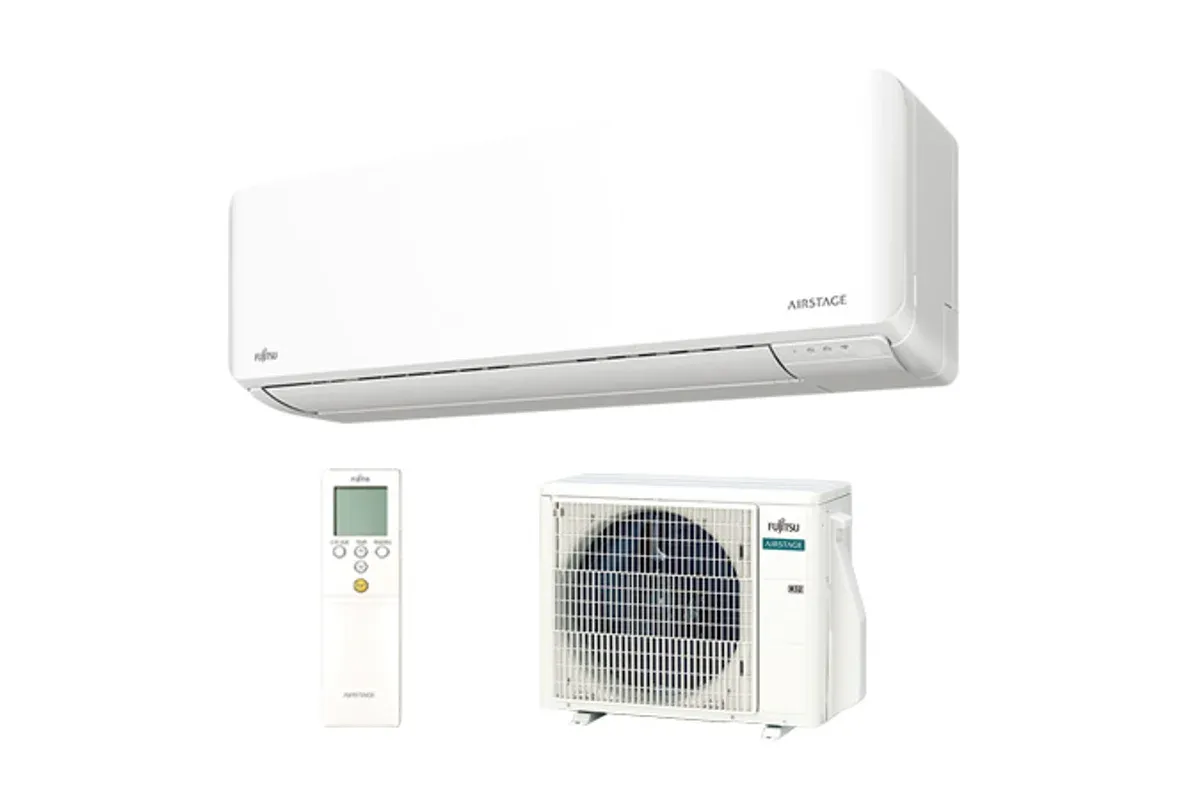
The Fujitsu ASEH12KMCG is a wall-mounted indoor unit from Fujitsu General's Standard wall split series, the one the catalogue files under "High Efficiency & Comfort". It pairs with the AOEH12KMCG outdoor unit, runs on R32, and is rated 3.4 kW of cooling and 4.0 kW of heating. In our house it's the wall unit on the first floor. We bought the whole air conditioning system through one installer: two Fujitsu outdoor units and eight indoor units in total. Nobody lives there yet. So this page is a spec sheet, Fujitsu's own catalogue read closely, plus the smart home question this blog asks of every device, and not a word about how it sounds at 2 a.m., because I don't know.
Where It Sits in Our Fujitsu Setup
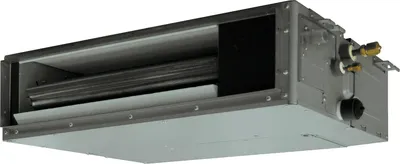
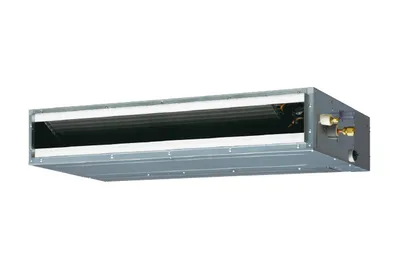
The house runs two separate Fujitsu systems. The ground floor has a mini VRF: one outdoor unit feeding four ducted indoor units and one split. The first floor has a multi system: one outdoor unit and three wall units. The ASEH12KMCG with its AOEH12KMCG partner is a first-floor wall unit. A smaller sibling from the same series, the ASEH07KMCG, serves the pantry.
Why two systems instead of one? I can report the layout, not the reasoning behind each pipe. The practical consequence for this page is simple: the numbers below describe this one pair as Fujitsu publishes them, not the whole house.
The Catalogue Numbers, and What They Mean
Every figure here comes from Fujitsu General's European product page for the ASEH12KMCG, which lists the AOEH12KMCG as the matching outdoor unit. Where a number has a test condition attached, I'll say so.
Capacity and Efficiency
Rated cooling is 3.4 kW, with a modulation range of 0.9 to 3.9 kW. Rated heating is 4.0 kW, with a range of 0.9 to 5.3 kW. Input power at the rated point is 0.960 kW cooling and 1.020 kW heating, which gives an EER of 3.54 and a COP of 3.92. Those two are single-point figures. The seasonal ones matter more for a bill: SEER 7.70 and SCOP 4.60 in the average climate, which puts the pair in class A++ for both cooling and heating. In the warmer climate zone Fujitsu quotes SCOP 5.40 and class A+++.
The design load, Pdesign, is 3.4 kW for cooling and 2.5 kW for heating at -10 C. That last number is worth a pause. A 4.0 kW heating rating shrinks to a 2.5 kW design figure once the outdoor air drops to -10 C, which is normal physics for an air-source unit and exactly why nobody should size winter heating off the headline number.
Annual energy consumption on the label: 155 kWh for cooling, 761 kWh for heating in the average climate, 337 kWh in the warmer one. Maximum operating current is 6.50 A cooling and 9.00 A heating on a single-phase 230 V, 50 Hz supply. Dehumidification is rated at 1.80 litres per hour.
Noise, Airflow and Air Quality
Indoor sound pressure in cooling steps down from 40 dB(A) on High to 35 on Medium, 30 on Low and 20 dB(A) on Quiet. Heating runs a touch louder: 42, 38, 33 and 22 dB(A). Sound power indoors is 55 dB(A) cooling and 58 dB(A) heating. The outdoor unit sits at 50 dB(A) sound pressure and 65 dB(A) sound power in either mode. Airflow on High is 700 m3/h indoors and 1700 m3/h through the outdoor unit.
Is 20 dB(A) really whisper quiet? On paper, yes. In a bedroom at night, the fan step is only part of the story: compressor cycling, refrigerant noise and the louver motor all live outside that one number. I'll measure ours when there's someone sleeping under it.
Fujitsu lists two filters for the series, an ion deodorization filter and an apple-catechin filter, plus a washable front panel. The feature icons also cover economy mode, powerful operation, a 10 C heating mode, outdoor unit low noise operation, auto changeover, a vertical swing louver, automatic fan speed, auto restart, sleep timer, program timer and a filter sign.
Size, Pipes and Installation Limits
The indoor unit measures 270 x 834 x 222 mm and weighs 10.0 kg. That 270 mm height is the number to check against the gap between a door frame and the ceiling. The outdoor unit is 541 x 663 x 290 mm and 24.0 kg, small enough for a wall bracket under a window.
Refrigerant pipes are 6.35 mm liquid and 9.52 mm gas. The drain hose is 13.8 mm inside diameter, 15 to 16.8 mm outside. Maximum pipe length is 20 m, and the factory charge of 700 g of R32 covers the first 15 m; beyond that the installer adds refrigerant. Maximum height difference between the two units is 15 m. R32 has a GWP of 675, so the charge works out to 0.473 tonnes of CO2 equivalent.
Operating range is -10 to 50 C outdoors in cooling and -15 to 24 C in heating. Read that heating floor carefully. The unit will run at -15 C, but Pdesign at -10 C has already told you how much heat to expect, and the catalogue doesn't publish a figure below that.
Does It Fit a Home Assistant House?
This is the question every device on this blog has to answer, and the honest answer for this pair is: possibly, with extra parts, and we haven't done it. Fujitsu lists "Smart device control" and "Wireless LAN control" among the series features, and the product page refers to an optional WLAN adapter. No adapter model number is printed on that page. Fujitsu's European optional parts list names two wireless LAN adapters, the UTY-TFSXH3 (USB type) and the UTY-TFSXJ3, without a table of which indoor units take which, so that match is a question for the installer or the current catalogue.
The adapter talks to Fujitsu's AIRSTAGE Mobile app. Fujitsu describes it as central operation of air conditioners from a smartphone "anytime, anywhere", with mode and fan speed control, a weekly timer, grouping by floor or room, up to five user accounts per indoor unit and a smart speaker connection. Two caveats from Fujitsu's own page: available functions vary by indoor unit model, and some units use the older FGLair app instead, with the right app identified by the adapter's SSID. Fujitsu also notes the AIRSTAGE Mobile adapters are only sold in Europe and North America.
What about Home Assistant itself? Two routes exist, and I've read both, not run them:
- FGLair, the integration built into Home Assistant since release 2024.9. It's cloud polling, it needs the FGLair account login, and it supports adapters whose names start with AP-WA, AP-WB, AP-WC, AP-WD or AP-WF. Devices named AC-UTY are explicitly not supported. It exposes a climate entity (mode, target temperature, fan, swing) and an outside temperature sensor where the unit provides one.
- ha_airstage, a community integration on GitHub by danielkaldheim, installed through HACS as a custom repository or by copying the folder into
custom_components. It works locally: you give it the adapter's IP address and a device ID, which is the adapter's MAC without colons, or the SSID with the "AP-WH3X-" prefix removed. MIT licensed, 158 stars at the time of writing, no formal release on the releases page.
The local route is the one that fits how this house is built. A cloud app that goes dark when the fibre does is fine for a vacuum and wrong for a bedroom air conditioner, and I'd rather have no app than an app I can't trust at 3 a.m. That's an opinion plenty of people will disagree with, since the official integration is the one with support behind it. We've decided nothing here. The adapter isn't confirmed, the integration isn't chosen, and the question of whether the air conditioning and the floor heating from the Gree Versati III heat pump will ever be told to stop fighting each other is still open. The Gree already has its local path through ESPHome and Modbus; the Fujitsu doesn't yet.
What We Actually Own, and What We Don't Know
We own the system. Two Fujitsu outdoor units, eight indoor units, this ASEH12KMCG and AOEH12KMCG pair on the first floor and the ASEH07KMCG in the pantry, all bought and installed through one installer. That's the complete list of first-hand facts.
What I can't tell you: a measured noise level at the pillow, a month of consumption, how fast it pulls a room from 28 C to 24 C, whether the Quiet step is enough for sleep, or how the app behaves after a router reboot. Nobody lives in the house yet. I'd rather leave those blank than invent them, and this page will get a second half once a summer has gone through it. If you want to see how we think about the brain above all these brand-name boxes, why we chose Home Assistant explains it.
Before You Order One
Three things to settle before the quote is signed. First, the exact WLAN adapter model for this indoor unit and whether it ends up with AIRSTAGE Mobile or FGLair, because that decides which Home Assistant route is even open to you. Second, where the indoor unit's pipe and drain exit, since the 270 mm body and the 15 to 16.8 mm drain hose set the hole you'll never move again, which is the whole argument of planning before the plaster goes on. Third, the pipe length: 15 m on the factory charge, 20 m with extra refrigerant, 15 m of height difference, all hard limits.
Is this the unit I would choose? Ask me after the first August. On paper it's an A++ pair with a 20 dB(A) quiet step and a local control path that exists, even if it isn't in the box. That's a reasonable place to start from.
Frequently Asked Questions
Does the Fujitsu ASEH12KMCG work with Home Assistant?
Not out of the box. Fujitsu lists wireless LAN control as a series function, but it needs an optional WLAN adapter and the AIRSTAGE Mobile app. From there, two routes exist: Home Assistant's own FGLair integration, which is cloud polling and only covers adapters whose names start with AP-WA to AP-WF, and the community ha_airstage integration, which talks to the adapter locally by IP address. We haven't set up either one yet.
What outdoor unit pairs with the ASEH12KMCG?
The AOEH12KMCG. It's a single-phase 230 V, 50 Hz unit measuring 541 x 663 x 290 mm and weighing 24 kg, with an outdoor sound pressure of 50 dB(A) in both cooling and heating. The pair is factory charged with 700 g of R32 and covers pipe runs up to 20 m, 15 m without extra charge.
How quiet is the ASEH12KMCG indoor unit?
Fujitsu's catalogue gives 20 dB(A) sound pressure on the Quiet fan step in cooling and 22 dB(A) in heating, rising to 40 and 42 dB(A) on High. Sound power is 55 dB(A) cooling and 58 dB(A) heating. Those are lab figures. Nobody lives in our house yet, so we have no reading of our own to put next to them.
How much does the ASEH12KMCG consume per year?
The energy label figures are 155 kWh a year for cooling and 761 kWh a year for heating in the average climate, based on SEER 7.70 and SCOP 4.60. In the warmer climate zone heating drops to 337 kWh a year at SCOP 5.40. Your number depends on the room, the set point and how many hours it runs, so treat these as a comparison tool, not a bill.