Tridonic Matter Lighting Control Modules
Tridonic builds Matter-certified wireless lighting modules with DALI support, bringing app and voice control to wired fixtures in a smart home.
Products
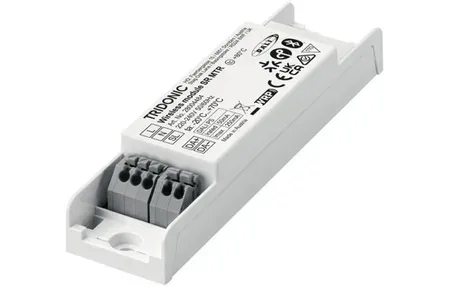
The Tridonic Wireless Module SR MTR brings Matter-certified lighting control with DALI...
Tridonic is a lighting-technology company best known for drivers, modules, and control gear that sit inside professional fixtures. Most people never see the brand, yet its components power lighting in offices, shops, hotels, and homes worldwide. If you've stood under a row of recessed downlights in a nice retail store, there's a fair chance a Tridonic driver was doing the dimming. The Wireless Module SR MTR is the company's push into Matter-based smart control, and it's where the smart lighting crowd starts paying attention.
We've spent years installing consumer bulbs that promise the world and then drop off the network. Tridonic comes at the problem from the opposite end. It builds the guts of a fixture first, then adds wireless control on top. That order matters more than it sounds.
Why Tridonic Matters for Smart Lighting
Tridonic focuses on the parts that actually make lighting controllable. A bulb gives you light. A driver decides how bright that light gets, how smoothly it dims, and whether it flickers at low levels. The company's modules add wireless control to fixtures that would otherwise need a wired dimmer behind the wall. That's the gap the SR MTR line fills.
The big news is Matter certification. The same module talks to multiple ecosystems instead of trapping you in one app forever. You can run it under Apple Home today and shift to Google Home next year without ripping anything out.
What a Lighting Driver Actually Does
People skip past drivers, then wonder why their dimming looks bad. Here's the short version. An LED needs a steady, regulated current. The driver supplies it. A cheap driver dims by chopping the signal, which gives you that gross strobe at 10 percent brightness. A good driver dims smoothly down to 1 percent or lower, which is what you want for a relaxed evening scene.
Tridonic builds both the LED light engine and the control gear, so the dimming curve is tuned end to end. That's hard to match with a random smart bulb screwed into a fixture someone else designed.
Where Tridonic Modules Fit
- Retrofitting wired fixtures with wireless control instead of a full rewire
- Bridging existing DALI installations into Matter and Thread
- Adding app and voice control to architectural and recessed lighting
- High-end residential projects where the lighting is built in, not screwed in
- Commercial spaces that need dependable, standards-based hardware at scale
How Does the Wireless Module SR MTR Work?
The SR MTR snaps onto a compatible Tridonic driver and gives that driver a wireless brain. Once it's paired, the fixture shows up in your Matter controller like any other device. You dim it, group it, schedule it, or pull it into scenes alongside your bulbs and plugs.
Under the hood it speaks Thread, the low-power mesh radio that Matter leans on for lighting and sensors. Thread is a quiet hero here. Every mains-powered Thread device acts as a router, so each fixture you add strengthens the mesh instead of straining your Wi-Fi. A house full of Tridonic-driven downlights becomes its own resilient network.
You'll still want a Thread border router somewhere in the mix. An Apple TV, a HomePod, or a Nest Hub usually covers it. Check our smart home hub notes if you're not sure what you already own that qualifies.
DALI Compatibility and Why It Still Counts
DALI is the protocol commercial lighting has run on for decades. It's wired, addressable, and reliable, which is why architects and electricians trust it for offices, galleries, and big homes. The catch is that wired DALI assumes you have a control system and the cabling already in place.
Here's where Tridonic earns its keep. A module that bridges DALI and Matter lets you add app and voice control to an existing DALI install without a rewire. That can save a serious chunk of a renovation budget. You keep the fixtures, keep the cabling, and bolt modern wireless control onto the front of it.
Is this overkill for a two-bedroom apartment with five smart bulbs? Honestly, yes. But for a property with built-in lighting across twenty zones, retrofitting beats tearing out ceilings every time.
Where Tridonic Fits in a Connected Home
For a home automation setup, the appeal is future-proofing without lock-in. Matter and Thread mean the module keeps working as platforms come and go. You start on one assistant, move later, and the hardware buried in your walls doesn't care.
This is enthusiast and integrator territory, not a grab-it-off-the-shelf bulb. Setup leans on a controller, a border router, and a little patience. But the payoff is lighting that behaves like part of the building rather than a gadget you tolerate. Voice control through a voice assistant drops right in once the fixtures are on Matter, so you get hands-free dimming without a second bridge.
Tridonic vs Consumer Smart Bulbs
A smart bulb is the easy answer. Screw it in, open an app, done. For renters and small setups that's the right call, and we'd never talk anyone out of it.
The trade-off is ceiling height, literally. Smart bulbs only exist where a socket exists. Built-in downlights, cove lighting, and linear fixtures usually have no socket at all. That's the slice of the home where Tridonic-style modules win, because the intelligence lives in the driver, not the lamp. You also keep the exact fixtures your designer chose instead of settling for whatever shape the bulb maker shipped.
Energy and Longevity
Good drivers run cooler and waste less power than the bargain electronics inside cheap bulbs. Over a fixture's life that adds up, and it ties into broader energy efficiency goals for the home. Tridonic publishes lifetime and failure-rate figures the way industrial suppliers do, which is more honesty than most consumer brands offer.
There's a quieter benefit too. When a smart bulb dies you toss the whole thing. When a module-based fixture has an issue, you often swap just the driver or the module and keep the rest. Less waste, less hassle.
Should You Choose Tridonic?
If you're building or renovating with integrated lighting, Tridonic deserves a spot on your shortlist. The Matter and Thread support, the DALI bridging, and the genuinely good dimming all point the same direction: lighting that lasts and adapts. For a simple apartment, stick with bulbs and save the complexity.
Either way, it helps to understand what's happening inside the fixture. Knowing the difference between a bulb, a driver, and a module is half the battle when you're planning a setup that should still work a decade from now.