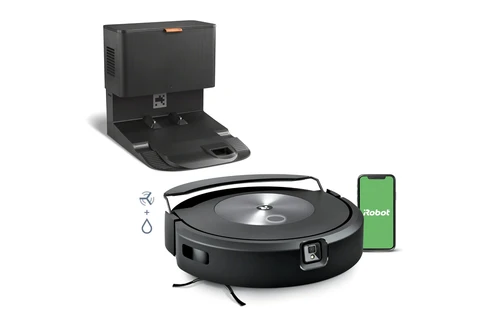
Roborock Saros 20 Sonic: Advanced Mopping Robot Vacuum

Product Details
🏭 Manufacturer: Roborock
🔌 Plug Format: AC Power
📏 Dimensions: 350 mm x 353 mm x 79.8 mm
🏳️ Country of Origin: China
🆔 Model Number: Saros 20 Sonic
📐 Size: D-shaped, 3.14 inches height
🎨 Style: Robot Vacuum Mop
🧲 Mounting Type: Freestanding Dock
🔧 Usage: Indoor Use
🧩 Included Components: Robot, dock base, user manual, power cord, disposable dust bag pre-installed in the dock
The Roborock Saros 20 Sonic puts 36,000 Pa of suction and sonic mopping in one unit. Before the spec sheet starts talking, one disclosure: I don't own this robot, and I've never owned a Roborock, a Dreame or an Ecovacs. The only robot vacuum I've lived with is an iRobot Roomba j7+, a single unit, two years old, working a flat rather than the house I'm still finishing. So this is Roborock's published data read next to what two years with a different robot taught me about which numbers survive contact with a floor. The VibraRise 5.0 Mopping System runs at 4,000 vibrations per minute and applies up to 14N of downward force, which Roborock puts 1.75x above the Saros 10.
The AdaptiLift Chassis 3.0 is specified to climb up to 8.8 cm, including double-layer thresholds (4.5 cm + 4.3 cm). Powered by the HyperForce Motor, it uses a dual anti-tangle system aimed at homes with shedding pets. Roborock rates it for hard floors and for thick carpets up to 3 cm, a range that matters if you have Berber or shag anywhere.
On paper the Saros 20 Sonic offers strong smart home integration through the Matter protocol and Wi-Fi. Its 3.14-inch profile is designed to pass under sofas, beds, and low entertainment centers. Roborock's page says the robot recognizes 300+ object types, using triple structured light and an RGB camera (the US page calls this Reactive AI 3.0). My Roomba does a cruder version of the same trick, and I'd argue obstacle recognition is the single feature that decides whether a robot runs unattended or needs a human to pick up cables first.
The sonic mop applies up to 14N downward pressure, which Roborock puts at 1.75x the Saros 10, and pairs it with microfiber pads. The vendor's argument is that vibration breaks down dried food and sticky residue that suction alone leaves behind. I can't confirm that from my own floor. My Combo j7+ mops too, but it has no sonic pad, so a vibrating one is interesting to me rather than familiar.
The RockDock maintenance system handles the parts owners normally hate. The dock washes mop pads with hot water at 100C, then dries them with 55 C warm air so they don't sour between runs. Roborock's global page says the dust bag goes up to 65 days without manual emptying. Worth knowing what "hands-free" really costs: self-emptying bases such as the one under my Roomba use disposable bags, so there is still a consumables bill. A self-emptying dock moves the chore, it doesn't delete it.
Roborock doesn't state a refill interval for the water tank on the pages I checked, so expect to watch the app's notifications at first. That's still less work than models that need mop pads washed by hand. Compatibility spans the Matter protocol, Alexa, Google Home, and Apple Siri, plus "Hello Rocky" voice commands, which Roborock says work without Wi-Fi.
The device also features battery-optimized operation and intelligent dirt detection. These continuously adjust suction and water pressure based on real-time floor conditions, automatically reducing energy consumption on clean areas while maximizing power where it matters.

Under the Hood
The Roborock Saros 20 Sonic combines several specialized motors and chassis innovations. The core HyperForce Motor delivers 36,000 Pa suction, lifting deep-embedded dust from long-pile carpets. Its main brush stabilization module maintains downward position during deep carpet modes, improving efficiency on the second pass when enabled via the app.
Suction Power & Motor
The 36,000 Pa HyperForce motor is Roborock's headline figure, and it's a maximum rating. PCWelt notes that the 36,000 Pa and the climbing figure are only reached under ideal conditions. For comparisons with other models, see our robot vacuum reviews.

Sonic Mopping & Navigation
The VibraRise 5.0 system features a wide, flat mop pad with independent motor for sonic vibrations and adjustable pressure/water flow. It ensures precise cleaning without gaps across hardwood and tile. Navigation relies on VertiBeam lateral structured light for side avoidance, and a FlexiArm side brush for edges. Roborock lists edge cleaning at 0 mm from the wall.

Obstacle Navigation & Build
The AdaptiLift Chassis 3.0 conquers obstacles that challenge other models, rated to climb up to 8.8 cm. Physically, the robot measures 350 x 353 x 79.8 mm, and robot plus dock weigh 14.33 kg together per Roborock's US page. The RockDock handles auto-refilling, detergent dispensing, and self-cleaning.

Works With
The Saros 20 Sonic is Matter-enabled, and Roborock names Alexa, Siri and Google Home as compatible. Matter control stays basic, so routines that need maps or zones go through the Roborock app, and Google Assistant works through the Google Home route. The Roborock app offers one-tap tailored settings, AI-powered mapping, and routine automation - it remembers optimal paths over thresholds, so your home layout is learned on the first run.

Roborock lists structured light, an RGB camera and a VertiBeam side laser for navigation. Voice control responds to "Hello Rocky" commands without Wi-Fi, per the maker. For broader IoT integration, Home Assistant has an official Roborock integration, which can tie cleaning to sensors and presence.
The integration depth means you can schedule cleanings before wake-up, start a run when the house reports that everyone has left, or kick off deep carpet mode before an evening with guests. That "everyone left" trigger is the one worth building properly. The signal I'd trust isn't a motion sensor at all, it's the arming state of an alarm panel. In my house that's a wired Satel panel, which Home Assistant reads through the satel_integra integration. A motion sensor tells you a room is empty for now. An armed alarm panel tells you the house is empty on purpose, and only one of those should be allowed to send a robot into a bedroom.

How People Use It
The Roborock Saros 20 Sonic shines in diverse home environments, tackling challenges that stump lesser robots. Here are key applications:
- Homes with thresholds: The AdaptiLift Chassis 3.0 is rated for 8.8 cm double-layer thresholds, which matters for rooms with raised sills.
- Pet-heavy households: Roborock claims a 0% hair-tangle rate for its DuoDivide main brush in its own tests, and the US page cites hair up to 15.75 inches.
- Mixed flooring surfaces: Dynamic elevation for 3 cm carpets combined with sonic mopping lifts the chassis over rugs while scrubbing hard floors edge-to-edge.
- Busy households: The RockDock handles hot-water washing and auto-emptying, so what's left is refills and the occasional bag swap.
These scenarios highlight its adaptability, making it a top choice for convenience-driven users.

Setting It Up
Getting the Roborock Saros 20 Sonic running involves two phases: Physical setup (10 minutes) and First mapping run (5-10 minutes depending on home size).
Initial Setup (10 minutes):
- Download the Roborock app and create an account
- Place the RockDock in an open area with clearance around it
- Fill the water tank and install mop pads or side brushes from the included components
- Pair the device via Wi-Fi through the app
First Run (5-10 minutes): Follow app-guided mapping. The robot auto-detects your layout and optimizes routes. Once complete, enable features like deep carpet mode or sonic mopping via the app settings. Voice assistant linking (Alexa, Google Home) is done from those apps.

Troubleshooting is app-based with diagnostics for common issues like low water or stuck wheels. Regular maintenance involves dock auto-functions, but manual wipe-downs keep components pristine. Firmware updates arrive through the app.
Advanced Cleaning Technologies
The Saros 20 Sonic combines several proprietary technologies that improve cleaning effectiveness. At 79.8 mm tall, it's built for low furniture, with Roborock quoting a 7.95 cm minimum clearance.
Dynamic cleaning on carpets adjusts chassis height intelligently, stabilizing the brush for deeper penetration. The sonic mop pad reaches walls and edges, with pressure up to 14N and an automatic detergent dispenser in the dock. The brush design targets hair tangles, which is the part that matters most with long-haired pets.

Maintenance and Dock Features
The RockDock washes mop pads with up to 100C hot water, which is the part that should keep a pad from smelling, and empties the dustbin into a bag that Roborock rates for up to 65 days. Warm air drying follows the wash, and detergent auto-dosing keeps the mix consistent instead of leaving it to guesswork. App notifications flag refills or clogs. Read that last line carefully: with any self-emptying base the alerts are the maintenance schedule, and ignoring them is how a dock turns into a blocked dock.

Is This Right for You?
The Roborock Saros 20 Sonic is a serious spend on floor automation, and the honest way to judge it is by what the specification promises rather than by a test I never ran. On paper it removes the two chores that make people give up on robot vacuums: emptying a tiny bin and rinsing a filthy mop pad. Whether that holds in your rooms depends far more on your thresholds, your rug pile and how much cable lives on your floor than on any suction figure.
Best for:
- Homes with shedding pets: The dual anti-tangle system is built to pass long hair through the roller instead of winding it around the axle. This is the failure mode I'd check first, because it's the one that turns a robot into a weekly repair job.
- Kitchens that get sticky: Sonic mopping targets residue that vacuuming alone leaves behind, such as juice spills and dried food around bowls.
- Smart home builders: Matter integration puts the robot inside broader routines through Home Assistant, Apple Home, or other platforms.
- People short on time: Ongoing maintenance is mostly tank, detergent and bag changes, versus the hand-washing that plainer docks demand.
Premium pricing targets households where the hours saved outweigh the outlay. The US store page lists a 1-year limited warranty (European retailers show the 24-month statutory term), and firmware updates add some long-term value, though I'd treat vendor support as an unknown until you need it.
Limitations & Considerations
While the Saros 20 Sonic excels in most scenarios, here's what to consider:
- Premium price point: This robot costs far more than budget models (entry-level robots: EUR 300-500). Roborock's US store lists $1,699.99 (out of stock when we checked in October 2026), and European retailers list around EUR 1,499 at full price with offers near EUR 999. Work out the payback period against the hours it actually saves you.
- Water tank refills: The dust bag lasts up to 65 days, but the water tank and detergent still need attention, and Roborock doesn't state a fixed interval. Not fully "set and forget." A Refill & Drainage dock version exists in some regions and removes the manual water handling.
- App dependency: Full feature access requires the Roborock app. While offline voice control works, scheduling and advanced mapping require connectivity.
- Learning curve for automation: Getting the most from Matter integration and routines requires some smart home experience or willingness to learn Home Assistant / Apple Home basics.
- Dock size: The standard dock measures 440 x 409 x 470 mm, which is large for a small flat.
How often does the water tank need refilling? Roborock doesn't publish a fixed interval on the pages I checked. It depends on cleaning frequency and floor area, so rely on the app's notification rather than a figure printed in a review.
Is the Saros 20 Sonic compatible with Apple HomeKit? Roborock lists Siri as compatible via Matter, and vacuum control in the Apple Home app needs iOS 18.4 or later, according to Tom's Guide. Expect basic controls (start, stop, pause). Scheduling and maps stay in the Roborock app.
What's the warranty coverage? The US store page lists a 1-year limited warranty, and the Coverage Summary it links to is the document to read for what is covered. Consumables such as mop pads, brushes and filters wear out, and Roborock sells replacement parts. Budget for those from day one, because consumables are the running cost nobody mentions in the product listing.
How does the sonic mopping compare to traditional spinning mops? Sonic vibration at 4,000 times per minute plus 14N of downward pressure is designed to break up sticky residue without soaking the floor, where spinning pads tend to spread water around. That's the mechanical argument for the design, not a measurement taken here.
Can it handle multiple floor types in one cycle? Roborock lists carpets up to 3 cm for dynamic carpet cleaning, and the mop is designed to lift for carpet. I haven't seen independent testing of how well it handles mixed floors in a single cycle, so check reviews for your rug type.
What smart home platforms are supported? Matter, Google Home, Alexa and Siri/Apple Home are named by Roborock. Home Assistant has an official Roborock integration as well. The most advanced automation happens through Home Assistant or the native Roborock app.
Is the 1-year warranty replaceable after expiration? The US store page shows an extended-warranty option priced at $0.00 alongside the 1-year term, so read the Coverage Summary before you assume anything. Outside warranty you're on your own with consumables and repairs. For what it's worth, the only robot I own, a Roomba j7+, has been in service for two years. One unit isn't a reliability study, and I haven't tracked what has been replaced, so don't read that as a durability figure for either brand.
Frequently Asked Questions
What makes the Saros 20 Sonic unique vs Saros 20?
The Saros 20 Sonic adds VibraRise 5.0 sonic mopping, which vibrates at 4,000 vibrations per minute with up to 14N downward pressure for deeper stain removal. Roborock rates both on a 36,000 Pa platform, so suction isn't the difference. The dock washes the mop pad with water up to 212 degrees Fahrenheit (100 C).
Does the Saros 20 Sonic support Google Home?
Yes. Roborock lists the Saros 20 Sonic as Matter-enabled and says it works with Alexa, Siri and Google Home. It also responds to the built-in "Hello Rocky" voice assistant, which Roborock says works without Wi-Fi. Matter vacuum control is basic (start, stop, pause), so scheduling and maps stay in the Roborock app.
What obstacles can the Saros 20 Sonic navigate?
The AdaptiLift Chassis 3.0 on the Saros 20 Sonic crosses double-layer thresholds up to 8.8 cm (4.5 cm + 4.3 cm, about 3.5 inches) according to Roborock's specification. Real-world results depend on the shape of the threshold.
How long does the battery last per charge?
Roborock's US store page quotes up to 180 minutes in Vac & Mop mode at Balanced suction, from a 6,400 mAh battery that charges from 15% to 100% in about 2.5 hours. Treat the 180 minutes as a best case, since stronger suction settings use the battery faster.
Can the Saros 20 Sonic clean under low furniture?
The robot is 79.8 mm (3.14 inches) tall, and Roborock's US page gives a minimum clearance of 3.13 inches (7.95 cm). Measure the gap under your sofa before you rely on that.
Video Review
Technical References
- Matter Alliance Smart Home Standard csa-iot.org Standards