Raspberry Pi Zero 2 W for Smart Home Projects
Product Details
🏭 Manufacturer: Raspberry Pi
📏 Dimensions: 65mm x 30mm
🏳️ Country of Origin: UK
🆔 Model Number: Raspberry Pi Zero 2 W
🎨 Style: Single-board computer
🧲 Mounting Type: Desktop
🔧 Usage: DIY Projects, IoT Applications, Smart Home Automation
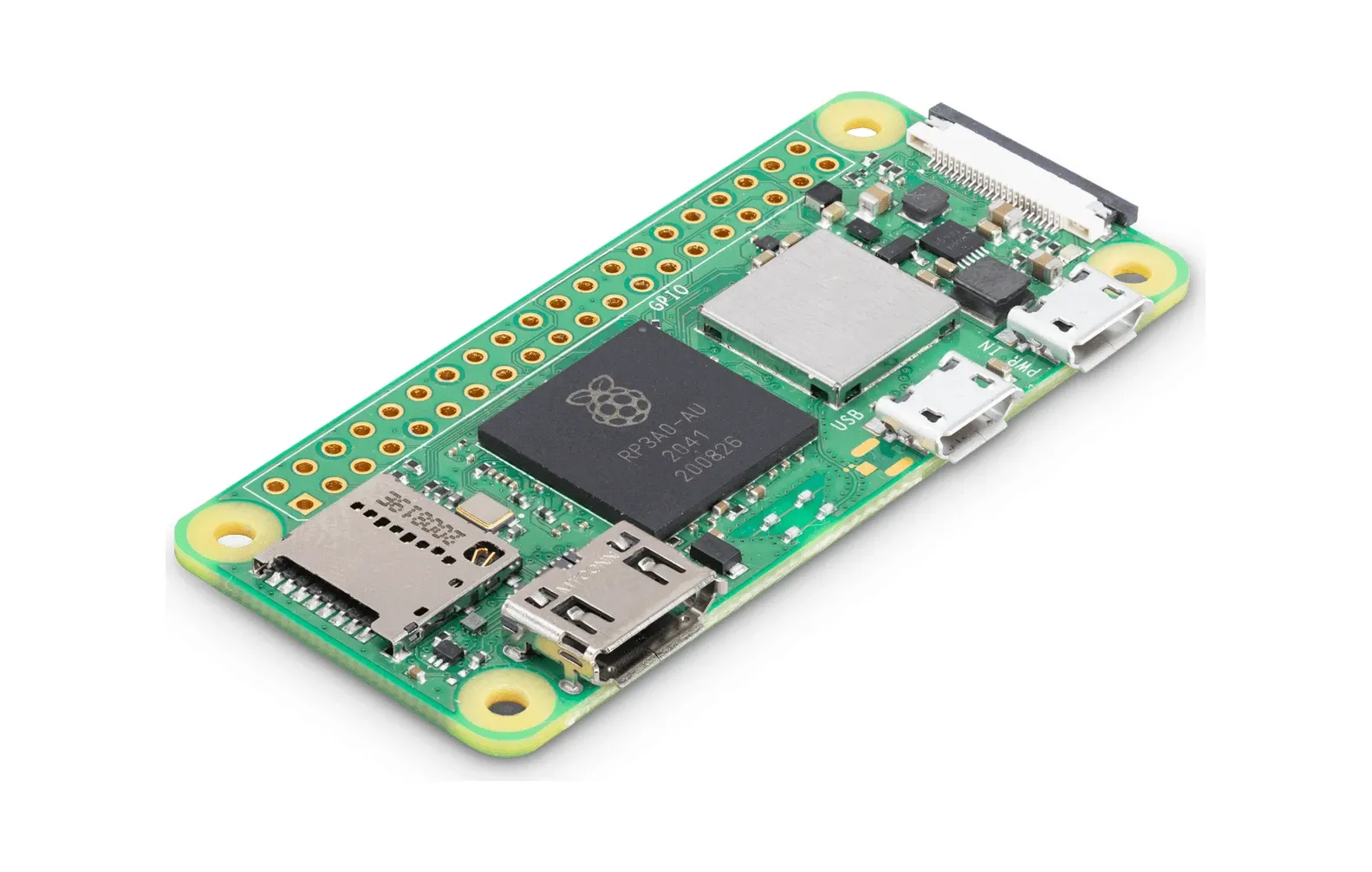
This guide covers the Raspberry Pi Zero 2 W, a 65mm x 30mm computer with a quad-core 64-bit Arm Cortex-A53 processor clocked at 1GHz and 512MB of SDRAM. It's a big step up from the single-core original, and it suits small smart home projects and IoT devices that don't need much memory. Raspberry Pi's product page still markets it as a $15 computer and says it stays in production until at least January 2030. Retail is murkier: SparkFun listed it at $19 and out of stock when we checked in October 2026, so expect to hunt for it.
Overview of Features

-
Processor Performance: The Raspberry Pi Zero 2 W features a Broadcom BCM2710A1 SoC, which is a clear jump over the original Raspberry Pi Zero. With four cores running at 1GHz, it offers about 40% more single-threaded performance and roughly five times the multi-threaded performance (Raspberry Pi's launch figures) compared to the single-core predecessors.
-
Connectivity Options: It includes built-in 2.4GHz 802.11 b/g/n wireless LAN, Bluetooth 4.2, and support for Bluetooth Low Energy (BLE). Note that it's 2.4GHz only, with no 5GHz Wi-Fi and no Ethernet unless you add a USB adapter.
-
Interfacing Capabilities: The board is equipped with a microSD card slot, a CSI-2 camera connector, a USB On-The-Go (OTG) port, and an unpopulated footprint for a HAT-compatible 40-pin GPIO header. The header is unpopulated on the base board, so you solder one on or buy a with-headers variant. That lets you add sensors and a camera.
-
Power Requirements: It is powered through a micro USB socket only. Raspberry Pi's product page points to its 12.5W micro USB supply (5V, 2.5A class) as the official option.
-
Video Output: The mini HDMI port carries video out (decode and encode are listed at 1080p30), and composite video can be accessed via test points.
-
Dimensions and Compatibility: Measuring just 65mm x 30mm, the Raspberry Pi Zero 2 W retains the same compact form factor as the original Raspberry Pi Zero, ensuring compatibility with most existing cases and projects.
Applications in Smart Home and IoT

The Raspberry Pi Zero 2 W is a versatile tool for developing smart home solutions. Its compact size and quad-core processor suit jobs like:
- Home Automation Hubs: By integrating with various sensors and switches, it can serve as a central control unit for managing lighting, temperature, and security systems.
- Smart Security Cameras: The CSI-2 camera connector allows easy integration with Raspberry Pi cameras for surveillance and monitoring applications.
- Environmental Monitoring: Users can connect sensors to monitor temperature, humidity, and other environmental factors, providing real-time feedback to adjust home conditions optimally.
Setting Up Your Raspberry Pi Zero 2 W
 To get started with your Raspberry Pi Zero 2 W, follow these basic steps:
- Power Supply: Use a decent 5V micro USB supply rated around 2.5A; the official 12.5W unit is the safe pick.
- Operating System: Download and install the Raspberry Pi OS on a microSD card.
- Connectivity: Establish Wi-Fi or Bluetooth connections for networking and device communication.
- Expansion: The board has a HAT-compatible 40-pin footprint. Solder a header on first, since the base model ships without one.
Project Ideas
 Here are some creative ways to utilize your Raspberry Pi Zero 2 W in smart home applications:
- Bluetooth Audio Receiver: The board has no audio jack, so you need a USB or I2S DAC to turn it into a Bluetooth receiver for a speaker system.
- Smart Alarm System: Use sensors to detect intrusion or anomalies and send alerts, for example by email.
Advantages and Considerations
- Compact Design: Ideal for space-constrained projects.
- Cost: low list price, but stock and retailer pricing vary.
- Power: draws more than the original single-core Zero.
- Cooling: sustained heavy loads can heat the board, so give it airflow or a heatsink in a closed case.
Smart Solution for Future Projects
Incorporating the Raspberry Pi Zero 2 W into your smart home projects opens up a world of possibilities. With its wireless connectivity, solid processing power, and compact size, it is a reasonable platform for DIY projects.
Here are some additional ideas for projects:
- Sensor Applications: Use the GPIO header to connect various environmental sensors.
- Automation with Voice Assistants: Integrate with Alexa or Google Assistant for voice-controlled applications.
Enhancing Your Smart Home Experience
Raspberry Pi Zero 2 W as a Central Hub
For those looking to integrate multiple smart devices into their home, the Raspberry Pi Zero 2 W can act as a small hub. With only 512MB of RAM, a full Home Assistant install is a poor fit, so stick to lighter jobs such as an MQTT bridge or a sensor gateway for your smart home ecosystem.
Expanding Capabilities with HATs
The 40-pin footprint is HAT-compatible, though many full-size HATs are physically bigger than the board (pHAT-format boards fit it better). These add-on modules can provide additional functionality, such as humidity sensors, motion detectors, or even relay modules, enhancing your smart home setup.
Community and Support
Raspberry Pi boasts a large community, and the official forums and documentation cover the Zero line well.
Raspberry Pi Zero 2 W: A Smart Home Major Upgrade
The Raspberry Pi Zero 2 W is notable as a versatile tool for crafting innovative smart home solutions. Its powerful processor, wireless connectivity features, and compact design make it an ideal choice for developing advanced IoT devices and integrating them into your home automation system.
Key Features for Smart Home Applications
- Quad-Core Processing: Offers significant performance boost for multitasking.
- Power: fine for mains-powered nodes; it draws more than the original Zero, so check your battery budget.
- Compact Design: Fits in most existing Raspberry Pi Zero cases.
Where It Lands
The Raspberry Pi Zero 2 W is a small, cheap board for IoT developers. It fits a sensor node, a small alarm project or a lighting script. It isn't a hub for a whole house, because of the 512MB of RAM and the single 2.4GHz radio.
If you only need Wi-Fi and Bluetooth on the cheapest board, the original Raspberry Pi Zero W is still an option, though it's single-core.
Frequently Asked Questions
-
Are existing Raspberry Pi Zero cases compatible with the Raspberry Pi Zero 2 W? The board keeps the original Zero's 65mm x 30mm footprint, so most cases fit, but check the case's port cut-outs.
-
Can I use Bluetooth Low Energy (BLE) devices with the Raspberry Pi Zero 2 W? Yes, it supports BLE, making it suitable for low-energy IoT devices.
-
Is the Raspberry Pi Zero 2 W suitable for beginner projects? Yes, if you're comfortable with Linux and a command line. There are plenty of guides online.
-
What is the operating temperature range of the Raspberry Pi Zero 2 W? The product brief, as reproduced by retailers, gives -20°C to +70°C.
-
Can I add custom functionality using HATs? Yes, it is HAT-compatible, allowing you to extend its capabilities with various add-on modules.
Key Takeaways
- Performance: quad-core 1GHz Cortex-A53, 512MB RAM.
- Wireless: 2.4GHz Wi-Fi and Bluetooth 4.2 with BLE.
- Compact Form Factor: Ideal for space-constrained projects and existing cases.
- HAT Compatibility: 40-pin footprint, header not fitted on the base model.