Aqara Motion and Light Sensor P2: Smart Detection

Product Details
🏭 Manufacturer: Aqara
🔌 Plug Format: Battery (2x CR2450)
📄 Specification Met: CE, FCC, RoHS
🔖 Part Number: ML-S03E
📏 Dimensions: 1.3 x 1.3 x 1.6 inches (33.1 x 33.1 x 41.6 mm)
🏳️ Country of Origin: China
🆔 Model Number: ML-S03E / ML-S03D
📐 Size: One size
🎨 Style: Modern
🧲 Mounting Type: Adhesive holder or tabletop stand
🔧 Usage: Indoor
🧩 Included Components: Sensor, holder, stickers, User manual
🔋 Batteries Required: Yes
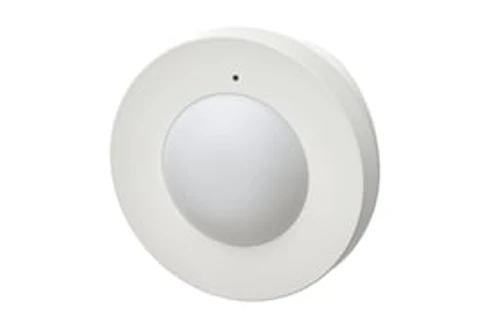
The Aqara Motion and Light Sensor P2 pairs a PIR motion detector with a separate ambient light sensor in one small battery device. It isn't a Zigbee sensor. Aqara's spec page lists Thread and Bluetooth 5.0, two CR2450 coin cells, and models ML-S03E and ML-S03D, and Matter Alpha's listing (part number AS057) describes it as a Matter-compatible Thread device. That changes what you need at home, so it's worth sorting out before you click buy.
Motion detection reaches up to 7 meters, covering 170 degrees horizontally and 45 degrees vertically, lab-tested at 25 degrees C according to Matter Alpha. Light detection is a separate sensor that can drive automations on its own, independent of motion. Retail listings quote a 0 to 1500 lux range, though that figure comes from resellers rather than Aqara's spec page.
What You Need Before It Works
A Thread sensor needs a Thread border router and a Matter controller. Apple TV 4K, HomePod mini, Google Nest hubs, Echo devices with Thread and the Aqara Hub M100 or Hub M3 can fill those roles, depending on what you already own. Matter Alpha says motion alerts reach the Matter app through a connected Matter hub and that automations run locally, so they keep working without internet or cloud access. It doesn't list specific compatible hubs, so check your own hub's Thread and Matter support first.
Don't expect Zigbee pairing through an Aqara hub such as the M2 or E1, because the spec page lists no Zigbee radio. If you run a Zigbee-only setup, the Aqara Motion Sensor P1 is the Zigbee PIR in the same lineup.
Quick Facts
- Radios: Thread and Bluetooth 5.0, with Matter support
- Power: two CR2450 coin cells, rated up to two years
- Models: ML-S03E (one holder, two stickers) and ML-S03D (two holders, four stickers)
- Body: 33.1 x 33.1 x 41.6 mm (1.3 x 1.3 x 1.6 inches)
- Release: January 2024, according to Matter Alpha
The two model numbers differ in what's in the box, per Aqara's spec page, so compare prices and pick the kit that fits your plan. The stickers and holders matter more than they sound, since they decide how many rooms you can cover before you need to buy spares.
Platform Support and Limits
Matter Alpha lists Apple Home, Google Home, Amazon Alexa and Samsung SmartThings. It also flags two gaps worth knowing about. Alexa doesn't support the light sensor function, and Aqara Home app support was still described as planned at the time of that page, with the firmware listed as 1.0.3.0. A headline from August 2025 mentions Matter 1.4 firmware for the P2, so the picture keeps shifting. Check what your platform exposes before you design automations around the light reading.
Automation Ideas That Fit the Hardware
The useful trick is the light sensor. A hallway light that only switches on when someone enters and the room is actually dim needs both readings, and this sensor delivers both in one device. Because the light sensor can drive automations separately from motion, you can also use it alone, for example to close blinds when a room gets too bright.
A few practical patterns work well. For night path lights, motion at night turns on a low-brightness light, and the light sensor keeps it off in daylight. In closets and pantries, motion switches the light on and a timeout switches it off again. For climate routines, a PIR sensor only sees movement, so a person sitting still can look like an empty room, which means you should treat its signal as a hint rather than a verdict. Those three cases cover most of what people actually build with a sensor like this, and none of them needs more than two conditions in the automation.
Placement and Setup
The box includes a holder and stickers, and Matter Alpha mentions a 360-degree stand for aiming the sensor. Aim the lens at the area you want to cover and keep it away from windows if you want the light reading to describe the room instead of the sun. Sensitivity is adjustable in the Aqara Home app, with medium as the default, according to Matter Alpha. Sensitivity and range shift with temperature and distance, so test the placement by walking through the zone before you stick it down.
Pairing follows the Matter route: scan the Matter setup code with your platform's app and let the Thread border router bring the sensor onto the mesh. Aqara lists an operating range of -10 to 55 degrees C and up to 95% non-condensing humidity, so it suits indoor rooms and covered spaces, not wet areas.
Batteries
Two CR2450 cells power it. Aqara's marketing and distributors quote up to two years, and Matter Alpha notes that battery life depends on how many Matter ecosystems the device is connected to. Treat two years as a ceiling, and expect less if you share the sensor with several platforms or place it in a busy hallway. Replacing two coin cells every year or two across a whole house adds up, so count the sensors you plan to buy before you commit to the format.
Who Should Buy It
Buy it if you already run Thread and Matter, for example an Apple Home or Google Home setup with a border router, and want a motion sensor with a real light reading that automations can use locally. Skip it if your network is Zigbee-only or if you depend on the Aqara Home app for everything, since support there was described as planned. For Zigbee, the P1 is the simpler PIR. For presence rather than motion, look at the mmWave FP300.
The honest summary: it's a small, well-specced Thread sensor with a split personality, motion plus light, and its main hurdle is knowing that it speaks Thread, not Zigbee.