Shelly Wave H&T: temperature and humidity over Z-Wave Long Range
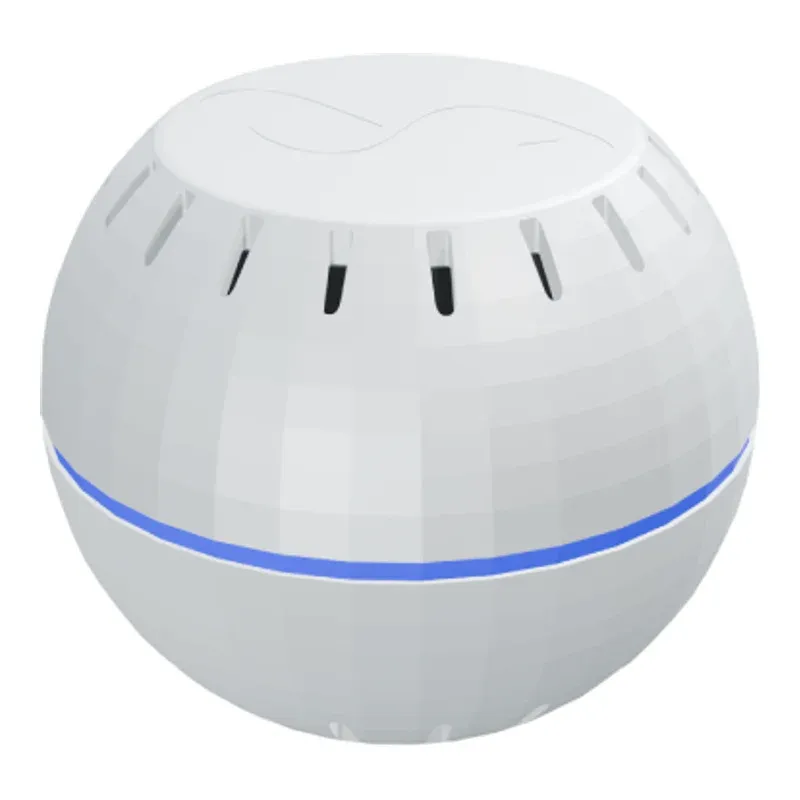
Product Details
🏭 Manufacturer: Shelly
🔌 Plug Format: Battery
📄 Specification Met: Z-Wave 800 Series, S2 Security
🔖 Part Number: QLHT-0U2ZEU
🏋️♂️ Weight: 16 g (without battery), 33 g (with battery)
📏 Dimensions: 35x46 mm / 1.38x1.81 in
🆔 Model Number: QLHT-0U2ZEU (EU), QLHT-0U2ZUS (US)
🎨 Style: Battery-powered climate sensor
🧲 Mounting Type: Wall Mount
🔧 Usage: Indoor Use
🧩 Included Components: Sensor, CR123A battery
🔋 Batteries Included: Yes
🔋 Batteries Required: Yes
The Short Version
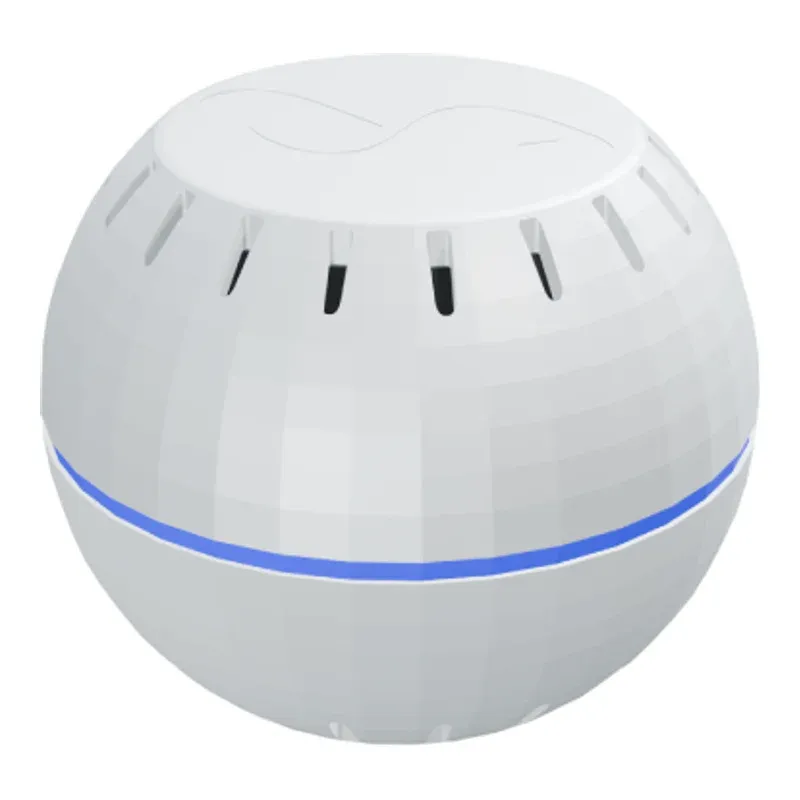
The Shelly Wave H&T is a small battery powered sensor that does exactly two things: it measures temperature and it measures relative humidity. No screen, no siren, no motion detection. It runs on a Z-Wave S800 CPU, which makes it one of the more current 800 series climate sensors you can buy, and it supports both classic Z-Wave mesh and Z-Wave Long Range. Shelly's US store lists it at 35.99 USD. The whole thing measures 35x46 mm, weighs 16 g without its battery and 33 g with it, and ships with a CR123A cell that Shelly rates at up to 2 years.
Cards on the table before the spec talk starts. The house I'm building has no Z-Wave in its plan. The sensors speak Zigbee to a USB coordinator on the Home Assistant machine, and everything in this review comes from Shelly's published documentation and from how Z-Wave JS is documented to behave in Home Assistant, not from a Wave H&T on my own wall. That is a weaker claim than pretending otherwise, and I would rather make the weaker true one.
Why review it at all, then? Because a house built on Home Assistant plus Google Home is exactly the kind of place this sensor gets considered, and the question of whether it belongs there has a real answer.
The Hidden Line on the Invoice
A Zigbee or Wi-Fi sensor is a one-line purchase. This isn't.
The Wave H&T has no Wi-Fi radio and no cloud account behind it. It talks Z-Wave or it talks to nobody. If your Home Assistant box has no Z-Wave controller yet, add one to the cart: an Aeotec Z-Stick 7 or a Zooz ZST39 LR, both in the 30 to 45 USD range at typical retail, plugged into the HA machine and driven by the Z-Wave JS integration. Only the ZST39 class of 800 series sticks gives you the Long Range mode that is half this product's pitch, which is worth knowing before you buy a leftover 500 series stick to save ten euros.
So the honest first-sensor price is roughly double the sticker. Is that disqualifying? Not by itself. Z-Wave brings things my Zigbee network genuinely doesn't have: a certification program that actually polices interoperability, S2 encrypted pairing, and a sub-GHz band (868.4 MHz mesh in the EU version, 908.4 MHz in the US one) that ignores the 2.4 GHz congestion my Wi-Fi and Zigbee share. My lighting decision went the other way anyway, and I would make that call again. Unbranded Zigbee is simply cheaper per room. But for a detached garage or a far corner the sub-GHz argument gets real.
Under the Hood
The S800 CPU is the headline. Z-Wave 800 series silicon brings lower sleep current than the older 700 series parts, which is where the two-year battery claim comes from, plus Z-Wave Long Range support and SmartStart provisioning. Shelly's own numbers, from the Wave H&T knowledge base entry, look like this:
- Mesh range: up to 40 m indoors
- Long Range: up to 80 m indoors, up to 1000 m outdoors line of sight
- Radio power: under 25 mW
- Battery: one 3 V CR123A, rated up to 2 years, USB adapter sold separately
- Ambient operating range: -20 to 40 degrees Celsius, 30 to 70 percent RH
Reporting is threshold driven and configurable. Parameter 161 sets the temperature change that triggers a report, adjustable in 0.1 degree steps, and parameter 163 does the same for humidity in 1 percent steps. Both readings also accept calibration offsets, which matters more than it sounds: cheap climate sensors routinely read a degree high, and a sensor you can trim against a reference thermometer is a sensor whose automations you can trust.
Read that ambient spec again, though. 30 to 70 percent relative humidity. The single most popular job for a humidity sensor is the bathroom fan automation, and a steamy shower blows past 70 percent RH in about a minute. Shelly doesn't say the device fails there, only that sustained operation outside that band is outside spec. My opinionated take: that range is too narrow for the product's most obvious use case, and Shelly should either qualify it or widen it. Plan bathroom duty with that caveat in mind.
The device supports OTA firmware updates through the controller and S2 security at inclusion. In LR mode it connects star-fashion straight to the gateway and does not repeat for other nodes, which is normal for LR but surprises people coming from mesh thinking.
Living With It in This Stack
How does a Z-Wave sensor behave in a house whose brain is Home Assistant and whose family-facing layer is Google Home?
Well, actually. Once the stick is in and Z-Wave JS is running, the Wave H&T lands in HA as temperature and humidity entities like any other sensor, with battery level alongside. Everything stays local. A router reboot changes nothing, because nothing here ever touched Wi-Fi in the first place; the radio path is sensor to stick, and the logic runs on the HA box. That is precisely the survive-a-router-reboot behaviour this house demands from every device that wants in.
Google Home never sees the sensor directly. Home Assistant publishes the entities to Google, so the household can ask a Nest speaker for the garage temperature without knowing or caring what radio delivered it. Alexa gets the same treatment through SmartThings or through HA's Alexa bridge, Hubitat speaks Z-Wave natively, and Shelly lists Siri support for setups where a HomeKit bridge surfaces the device. All of that is the hub's work. The sensor itself remains a mute little puck that reports numbers.
It is the same lesson the Aqara Zigbee gear in my flat taught me when it outlived two changes of controller, and the pattern would hold for the Shelly Wave Plug US too: keep the layer above the radios neutral and the radios stop mattering to the people who live in the house.
Where It Earns Its Keep
The interesting placements are the ones my 2.4 GHz devices handle badly.
A detached garage. A greenhouse at the far end of the plot. An attic that bakes at 40 degrees in summer and flirts with the bottom of the operating range on sub-freezing nights. Long Range's 1000 m line-of-sight figure is a marketing-conditions number, and walls will eat most of it, but even a quarter of it beats what a battery Zigbee leaf manages once it loses its last router. Pair the readings with logic in HA and the automations write themselves: crack the roller shutters via TaHoma before the west rooms overheat, kill the irrigation cycle when the greenhouse drops toward frost, alert when the garage humidity says the door seal has failed.
Could a 15 USD Zigbee sensor do the indoor jobs? Honestly, yes, and in most rooms of my house that is the plan. This device argues for the edges of the property, not the middle.
Getting One Running
Setup is standard modern Z-Wave. Pull the battery tab, put the controller in inclusion mode, and either let SmartStart handle it by scanning the QR code or trigger classic inclusion from the device. Choose mesh or Long Range at this step; you cannot mix both on one node. Mount the puck with its wall bracket somewhere air actually circulates, away from direct sun, radiators, and exterior-wall cold spots, or the calibration offset will be doing permanent duty.
Tuning the Reporting Thresholds
The defaults are sensible, but the thresholds are the battery-life dial. A 0.5 degree temperature trigger keeps a living room chart smooth. In a stable storage room, 1 full degree halves the chatter for no real cost. Humidity at 3 to 5 percent steps catches a shower or a leak without waking the radio for weather drift. What kills the two-year battery claim is enthusiasm: set 0.1 degrees everywhere and the CR123A becomes a subscription. And CR123A cells cost noticeably more than AAA, so the threshold screen deserves five minutes of your attention.
The Verdict
The Wave H&T is a well-specified, fairly priced climate sensor on the most current Z-Wave silicon available, from a manufacturer that documents its parameters properly and ships the battery in the box. For a house that already runs Z-Wave, it is an easy recommendation at 35.99 USD.
For a house like mine, the answer is narrower. I wouldn't start a second radio network for one indoor sensor; a Zigbee equivalent costs less than half as much and joins hardware I already own. But the moment the shopping list says outbuilding, the math flips. An 800 series stick plus this sensor is a clean, local, encrypted way to reach a structure that Wi-Fi and Zigbee reach badly, and every reading still ends up as a plain Home Assistant entity that Google Home can speak aloud. That is the test every device faces in this house, and the Wave H&T passes it, just not in every room.
Frequently Asked Questions
Does the Shelly Wave H&T need a hub?
Yes, always. It is a pure Z-Wave device with no Wi-Fi radio, so it needs a Z-Wave controller: Home Assistant with a USB stick like the Aeotec Z-Stick 7 or Zooz ZST39, a Hubitat, or a SmartThings hub with Z-Wave support. Without one it does nothing at all.
How long does the CR123A battery last in the Wave H&T?
Shelly rates it at up to 2 years on the included CR123A cell. That figure assumes sane reporting thresholds. If you tighten the temperature trigger to its 0.1 degree minimum, the radio wakes far more often and battery life drops well below the headline number.
Does the Shelly Wave H&T work with Google Home and Alexa?
Not directly. The sensor talks only to its Z-Wave hub, and the hub exposes it onward. Home Assistant can publish the readings to Google Home, SmartThings feeds Alexa, and Shelly lists Siri support when the device is surfaced through a HomeKit-bridging setup. The hub does the voice work, not the sensor.
What is Z-Wave Long Range and does the Wave H&T support it?
Z-Wave Long Range is a star topology mode on 800 series chips that trades mesh hopping for reach: Shelly quotes up to 80 m indoors and up to 1000 m outdoors line of sight. The Wave H&T supports both classic mesh and LR, and you pick one during inclusion. In LR mode it talks straight to the controller and never repeats for other devices.
Can the Shelly Wave H&T run on USB power instead of the battery?
Yes. Shelly sells a separate USB power adapter for the Wave H&T. On USB the two-year battery math stops mattering and you can set aggressive reporting thresholds without guilt. The battery stays useful as backup during outages.