Veno Smart Switches - Zigbee Battery-Powered
Veno makes battery-powered Zigbee switches that require no neutral wire and no mains wiring. The Pro Wireless model installs without cutting cables.
Products
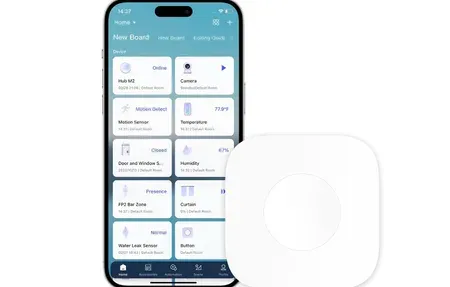
Veno Pro Wireless Zigbee switch: battery-powered, no wiring, self-adhesive EU plate. Works...
Veno produces a focused range of wireless smart switches built around a single design constraint: no mains wiring. Their flagship product, the Veno Pro Wireless Smart Switch, runs on a battery and communicates via Zigbee 3.0. It fits standard EU wall boxes and works alongside any Zigbee hub, including Home Assistant with ZHA or Zigbee2MQTT.
What Makes Veno Switches Different
Most smart switch upgrades require either a neutral wire at the switch box or a complete switch replacement. Veno sidesteps both. The Pro Wireless model mounts over your existing switch, connects via Zigbee, and runs on a single battery rated for two to three years under normal use. There is no mains connection, no neutral requirement, and no electrician needed.
This makes Veno switches useful in three specific scenarios:
Key Points
- Rented apartments where drilling or rewiring is not permitted
- Older buildings with two-wire circuits and no neutral at the switch box
- Switch locations far from a power source, where running new cable would be expensive
The trade-off is battery management. Unlike mains-powered relays like the Sonoff ZBMINIL2, which draw power continuously from the line they control, Veno switches depend on battery charge. The upside is zero standby draw from your circuit; the downside is replacing or recharging batteries every few years.
Zigbee Integration
Veno switches use Zigbee 3.0 and pair with standard coordinators. In Home Assistant, the switch shows up as an on/off entity via ZHA or Zigbee2MQTT without custom drivers. For households already running an Aqara Hub or similar Zigbee hub, Veno devices join the same mesh network as other Zigbee devices.
Veno does not make its own hub or app. This is a deliberate choice, the switches are designed to integrate into existing smart home setups rather than create a separate ecosystem. If you want Alexa or Google Home control, you run it through your existing Zigbee hub's cloud integration.
Installation
No tools required beyond a screwdriver. The switch mounts over your existing wall plate with adhesive or screws, connects via Zigbee during pairing, and responds to your original switch mechanism plus any Zigbee command. The physical switch continues to work as a manual override.
Setup takes under five minutes if you already have a Zigbee coordinator running.
Pro Wireless: Key Specifications
The Veno Pro Wireless runs on a single CR2477 or comparable lithium coin cell. Rated battery life is two to three years at typical residential switching rates, roughly 10-15 actuations per day. If you're using it in a high-traffic area like a hallway where someone triggers it 40-50 times daily, expect closer to 12-18 months before replacement.
The relay rating is 10A at 230V AC, covering the full range of standard EU lighting loads. Veno specifies a minimum load of 5W for reliable switching, which rules out very low-wattage indicator lights but covers any standard LED bulb above 5W. Resistive loads like incandescent or halogen bulbs work without issue.
Zigbee range is quoted at 10 meters indoors, consistent with other Zigbee 3.0 devices at 2.4 GHz. In practice, it joins and routes through the existing mesh, a flat with three or four Zigbee devices already running rarely has range issues. The switch also acts as a Zigbee router when powered, so adding one helps rather than burdens your mesh.
Common Questions
Can the Veno Pro Wireless control a dimmable circuit? No. The relay is on/off only. Dimming requires a different device class entirely, a TRIAC dimmer or a 0-10V controller, neither of which Veno currently makes. If dimming matters for your setup, look at dedicated Zigbee dimmer modules instead.
Does the Veno switch work with Google Home or Amazon Alexa directly? Not without an intermediary. Veno has no direct cloud integration. The path to voice control is: Veno Pro Wireless, Zigbee coordinator, Home Assistant or similar hub, Google Home or Alexa via a hub integration. That's two or three configuration steps, not one.
Is there a double-gang version? As of 2026, the Veno product range is limited to the single-gang Pro Wireless model. For double-gang plates, two separate units are needed. They pair independently and operate independently, there's no ganged mode.
Veno vs Mains-Powered Alternatives
Veno switches occupy a niche between battery-powered scene controllers and wired smart relays. They offer more automation capability than a simple Zigbee button (the relay actually controls the load), but require occasional battery attention that wired solutions avoid. For no-wiring rental installs, they are one of the few viable options in the EU market.
Compared to a hidden relay like the ZBMINIL2, which trickle-charges from the mains line, the Veno switch is truly wire-free. The downside isn't the battery itself, it's the minimum load constraint. The ZBMINIL2 needs at least 3W to maintain mains-power connection; the Veno needs 5W for reliable switching. In most lighting circuits these differences are academic. Where they matter is in circuits with very low-wattage loads or multiple switched loads wired in parallel.
For renters or anyone without permission to modify electrical wiring, the Veno Pro Wireless is one of about three realistic smart switch options in the EU market. That's a short list, and this device holds its place on it.
One practical note on battery replacement: the CR2477 cell the Pro Wireless uses isn't in every corner shop, but it's widely available online and costs under EUR 2. Keeping one spare at home means a dead battery is a two-minute swap, not a disruption. At a two-to-three year replacement interval, the running cost per year is negligible compared to what you'd pay an electrician to run new wiring to the same switch box.