Smart Home Tools to Protect and Display Your Art Setup

This post may contain affiliate links. As an Amazon Associate we earn from qualifying purchases. Disclosure.
Owning art at home means fighting humidity, UV, temperature swings, and burglary risk constantly. Museums solve all four with monitoring systems that cost more than most cars. Home smart tech delivers 80% of the protection at 5% of the museum cost, with the bonus that the data stays under your control.
Owning art at home means fighting humidity, UV, temperature swings, and burglary risk constantly. Museums solve all four with monitoring systems that cost more than most cars. Home smart tech delivers 80% of the protection at 5% of the museum cost, with the bonus that the data stays under your control.
I started collecting prints and small original works during the pandemic. The first watercolour I bought faded noticeably within six months because the wall got afternoon sun and I had not thought about UV. The replacement cost was the same as a full smart-sensor mesh for the flat. Smart tech is genuinely cheaper than learning conservation the expensive way. The same humidity and temperature monitoring keeps a smart home wine cellar stable, since wine and watercolours both hate the same swings.
The Four Environmental Variables That Damage Art
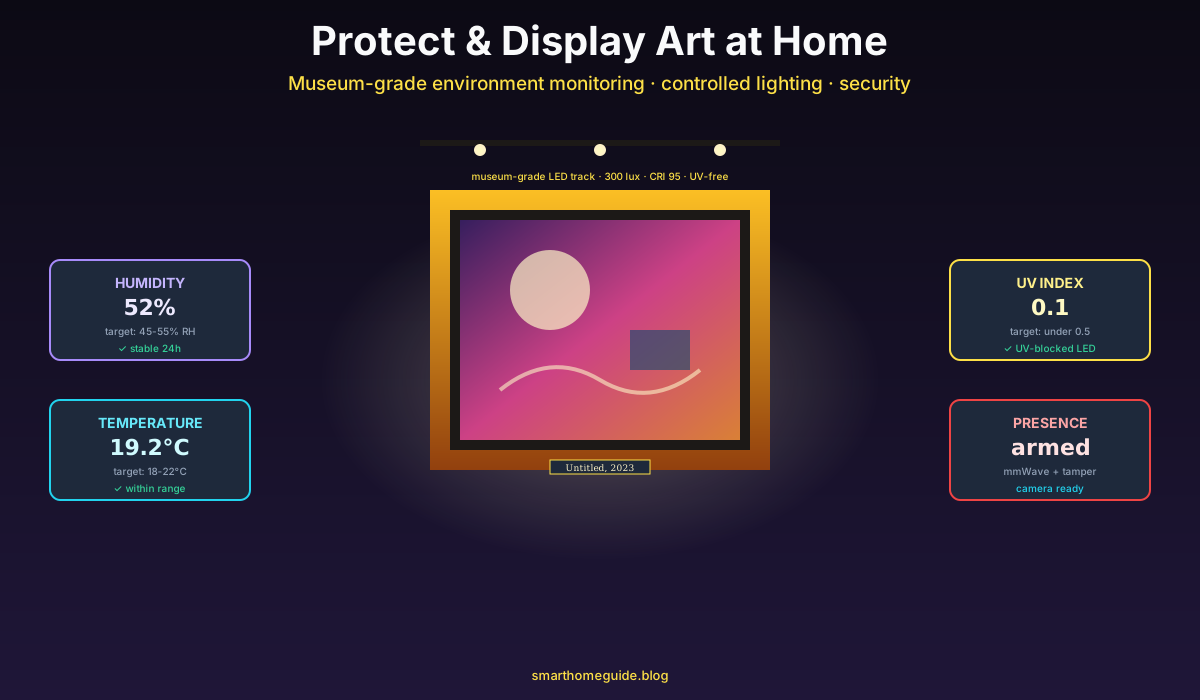
Protection is one side of the coin; presentation is the other, and managing and displaying collections covers how to light and stage pieces once they're safe. Conservators name four variables that account for most damage to art over time. Each one has a target range and each one is trivially measurable with smart home sensors.
Humidity is the biggest single threat. Wood frames warp, canvas tightens or loosens, paper foxes, ink bleeds. The Smithsonian Museum Conservation Institute environmental guidelines recommend 45-55% relative humidity with daily fluctuation below 5%. Most UK homes swing from 30% in winter to 70% in summer without intervention, which is murder on art.
Temperature matters less than humidity but interacts with it. Cold air holds less water, so winter heating that drops humidity below 30% causes paper damage even at "comfortable" room temperatures. The target range is 18-22 degrees C, again with low fluctuation.
Light, specifically UV, fades pigments cumulatively over the artwork's lifetime. Direct sunlight at 100,000 lux for an hour does more damage than indirect indoor light for a year. Avoid sunlight; use UV-filtered LED for display. The cumulative dose matters, not the peak intensity.
Pollution from cooking smoke, candles, and tobacco creates surface deposits that are hard to remove. Air quality sensors track this proxy through PM2.5 readings; values consistently above 15 ug/m3 suggest poor ventilation or active pollution sources.
Building a Sensor Mesh for Art Rooms
One temperature/humidity sensor per room covers basic monitoring. For a flat with art in three rooms, three Aqara TVOC Air Quality Monitors (about 50 GBP each) or three SwitchBot Hub 2 units cover the temperature, humidity, and light measurement. The light measurement is incidental but useful for tracking accidental sun exposure.
Add a dedicated UV sensor near each major artwork. The Aqara cube and most temperature/humidity sensors do not measure UV directly; you need a specific UV index sensor like the AS7331 or VEML6075 connected to an ESP32 board. Total cost around 12 GBP per location. This is overkill for inexpensive prints but worth the cost for original watercolours or photographs.
A Home Assistant dashboard aggregates the readings. Per-room cards show current value plus 24-hour min/max. The whole-home view summarises which rooms are out of range. Daily automations email a summary report if any value drifted outside the safe band overnight.
In my flat, the dining room is the worst-performing zone because it has both a south-facing window and an open-plan kitchen producing cooking moisture. The dashboard catches the humidity spike during dinner prep within 10 minutes; without the sensor I would never have noticed the daily 20% RH swing on the wall opposite the kitchen.
UV Protection and Art-Safe Lighting
Display lighting is where most home collectors fail. Cheap LED bulbs in a track fixture above a painting can deliver enough UV to fade pigments within a few years. Quality art-display LEDs cost only slightly more and produce negligible UV.
Specifications to look for in display bulbs:
- UV index below 0.5 (most quality LEDs hit 0.1)
- Colour rendering index (CRI) 90 or higher (95+ preferred for vibrant work)
- Colour temperature 3000K for warm-toned art, 4000K for cool palettes
- Beam angle 24-36 degrees for spot lighting on individual works
Brands worth considering: Soraa Vivid for the highest CRI, Cree GU10 art-display bulbs, IKEA TRADFRI Spotlight for the budget end, and Philips Hue White Ambiance for smart-integration buyers. Costs range from 15 GBP per bulb at the budget end to 60 GBP per bulb for Soraa specialty units.
For valuable works on paper or watercolour, limit illuminated time. A Home Assistant automation switches off the display lighting when the room has been empty for 30 minutes, dropping cumulative light exposure by 60-80% over the artwork's life. The art looks bright when people are looking; the rest of the time it sits in the dark.
The Tate's caring for art at home guidance covers the lighting principles in more depth. The summary: keep the lux below 50 for the most fragile works, under 200 for paper, under 300 for oil.
Climate Control Beyond Sensors
Knowing the humidity is wrong does not fix the humidity. Three approaches solve the underlying problem at different price points.
Whole-home humidifiers and dehumidifiers integrated into central heating cost 800-3000 GBP installed but produce the most stable environment. Worth it if the collection value crosses 50,000 GBP or if any of the works are signed by living artists who require active conservation. Most home collectors are not at that threshold.
Room-level humidifiers on smart plugs handle one critical room. A Levoit LV600S smart humidifier (about 130 GBP) on a smart plug integrated with the room's humidity sensor produces a closed-loop control system: humidity drops below 45%, plug turns on, humidifier runs until humidity reaches 52%, plug turns off. The control loop runs in Home Assistant.
For very valuable individual works, microclimate display cases provide museum-grade stability for one artwork at a time. Brands like ClimaArte and Hahnel manufacture cases with active humidity control inside the case itself. Cost is 500-2000 GBP per case but the artwork sits at a stable humidity regardless of room conditions.
Security Layers for Displayed Art
A documented inventory plus presence-triggered cameras plus tamper sensors covers most realistic theft scenarios. Each layer adds to the deterrent without breaking the visual integration of the room.
Tamper sensors on the back of each frame fire when the artwork is removed from the wall. A small Zigbee contact sensor like the Aqara P2 mounted on the frame and a small magnet on the wall mounting point creates a tamper alarm: separation triggers a high-severity Home Assistant automation. Cost: about 15 GBP per artwork.
Camera coverage of art-display walls catches anyone interacting with the works. A discreet camera with PoE power and local recording covers a gallery wall for around 150 GBP for a Reolink RLC-820A or similar. Local recording (no cloud) gives you control of the footage.
The documented inventory is what makes insurance claims work. A Home Assistant dashboard listing every artwork with photos, dimensions, purchase date, purchase price, and current appraised value creates a complete record. Export the inventory as PDF monthly and store off-site (Google Drive or similar). Without documentation, insurance pays the policy minimum after a theft; with it, claims process at full appraised value.
My Own Setup for a Modest Collection
Total kit running on the 30-piece print and small original collection in my flat:
- Three Aqara TVOC Air Quality Monitors (one per art room): 150 GBP
- Two ESP32 boards with UV sensors near the most light-sensitive works: 24 GBP
- One Levoit smart humidifier in the main living room: 130 GBP
- One Philips Hue smart bulb in the entrance gallery track light: 50 GBP
- Twelve Aqara contact sensors as tamper alarms on the highest-value frames: 180 GBP
- One Reolink RLC-820A covering the main wall: 150 GBP
Total: about 680 GBP. The single most expensive print in the collection is worth more than the entire sensor system. The full collection appraises at roughly 20,000 GBP. The sensor system pays for itself by preventing damage to two of the higher-value works over its expected lifetime.
The everyday experience is that I never think about it. The dashboard shows green most of the time. Once a quarter the humidifier needs a tank refill. Once a year I generate the insurance documentation. The rest of the time the system runs silently and the art stays in good condition. The smart home tools have become invisible infrastructure rather than another thing to manage.
What the Smart Approach Does Not Replace
A few honest limitations. The sensors catch environmental problems but cannot fix structural framing issues. A poorly-mounted frame in good humidity still fails in time. Quality framing remains essential and no smart home setup substitutes for it.
The vision-based security covers external threats but not internal ones. Domestic staff, frequent guests, or children handling artwork are out of scope for tamper sensors. Cultural awareness and clear house rules still matter.
Insurance claims still need a real adjuster, photographs taken before any cleaning, and police reports filed within 24 hours. The smart inventory accelerates the paperwork but does not bypass it. Practice the claim flow on a low-value piece if you ever have damage to a cheap print, so the process is familiar when something serious happens.
Within those limits, the kit above gives a moderate art collector museum-grade environmental control at hobbyist prices and significant security improvement at modest additional cost. Start with the temperature and humidity sensors for the main display room; add tamper sensors and a camera as the collection grows. The progression scales naturally without making any single decision financially painful.
For additional context, see the International Council of Museums for authoritative reference material.
Frequently Asked Questions
What humidity range protects art at home?
Aim for 45-55% relative humidity year-round, with daily swings below 5% and seasonal swings below 10%. Most damage to art comes from fluctuation rather than absolute level. A wood frame in stable 60% humidity does better than the same frame swinging 35-65% across seasons. Smart humidity sensors flag both the level and the rate of change so you can intervene with a humidifier or dehumidifier before damage occurs.
Does indoor LED lighting damage paintings?
Quality LED lighting designed for art display causes negligible damage, unlike old halogen or incandescent fixtures. Look for LEDs rated below 0.5 UV index, with CRI 90+, and limit total exposure to under 200 lux for works on paper or watercolour and under 300 lux for oil paintings. Smart bulbs with these specs cost a small premium over commodity bulbs and prevent the cumulative fade damage that ruins art over decades.
How do I track multiple climate sensors across a home gallery?
Home Assistant template sensors aggregate readings from individual Zigbee or Bluetooth sensors into a per-room dashboard. One temperature and humidity probe per room (around 20 GBP each) feeds a daily report showing min/max/average per room over 24 hours. Set automation alerts for any value outside the safe range for more than 30 minutes. The total cost for an 8-room home is around 160 GBP for the sensor mesh.
Should valuable art be in a humidor-style display case at home?
For very valuable works (£10,000+ pieces, antique watercolours, vintage photographs) yes. A microclimate case with active humidity control gives museum-grade stability that ambient room control cannot match. Cost is around 500-2000 GBP per case from suppliers like ClimaArte or Hahnel. For lower-value works, room-level climate control with smart sensors is sufficient and dramatically more practical for everyday display.
How does smart home tech deter art theft?
Three layers help: a presence-detection system that triggers cameras when motion is detected near art when nobody should be home, tamper sensors on the back of frames that fire if the artwork is removed from the wall, and a documented inventory in Home Assistant with photos and serial numbers ready for police. The combination shifts the cost-benefit for any opportunistic thief and gives insurers the evidence they need to process claims faster.