Google Home Gemini Update - AI-Driven Features Guide

This post may contain affiliate links. As an Amazon Associate we earn from qualifying purchases. Disclosure.
Discover how Google Home's latest Gemini update, powered by AI, boosts smart home automation with new features, expanded device compatibility, and improved security.
What Is the Google Home Gemini Update Overview?
Google's new Gemini update for Google Home transforms smart home management by introducing AI-driven automation, more intuitive device control, and enhanced security features. With this update, managing a connected home becomes more intelligent and responsive. Gemini for Home represents a major upgrade that replaces traditional Google Assistant with advanced artificial intelligence capabilities designed specifically for smart home environments.
TL;DR: Google Home's Gemini update replaces the old Google Assistant with conversational AI that understands context and follow-up questions. Basic voice control is free on all Nest devices; the advanced camera AI features (like searching video history with natural language) require Nest Aware at $8-15/month.
Bottom line: Google Home's Gemini update replaces the old Google Assistant with conversational AI that understands follow-up questions, learns your household patterns, and lets you search camera history with natural language like "show me when the doorbell rang yesterday." Basic Gemini voice control is free; advanced camera AI features require Nest Aware ($8-15/month).
Curious about the underlying standard? It is documented at Thread Border Router documentation. If you are setting up Google Home for the first time, our Google Home devices setup guide covers the basics before diving into Gemini features. This post zeroes in on one thing: the Gemini conversational voice layer. If you want the wider list of everything that shifted in the 2026 release, the 11 AI-powered upgrades breakdown covers the rest feature by feature. I tested the Gemini update on a Google Nest Hub Max and Nest Cam setup at home, the shift from traditional voice commands to conversational AI is immediately noticeable. You can ask follow-up questions without repeating device names, and the system understands context in a way the old Assistant simply did not.
What Are the Key Capabilities of Google Home Gemini?
New 2K Nest Devices
The update brings several new devices that enhance smart homes with better monitoring:
- Nest Cam Indoor 2K ($99.99) - Crystal-clear indoor monitoring
- Enhanced outdoor cameras with improved image quality for complete coverage
- Direct integration with Gemini's natural language commands for effortless routine setup
These cameras integrate easily with Gemini's natural language commands for setting up routines effortless, allowing users to create complex automations with simple voice requests.
Enhanced Camera Function
Advanced AI-powered camera features provide improved detection capabilities. Nest Aware Plus subscribers gain access to enhanced event detection that identifies people, animals, packages, and vehicles with greater accuracy. This functionality keeps your home more secure while reducing false alerts, giving you greater peace of mind by monitoring unusual activity more effectively.
Simplified Home Automation
Setting up home automation routines is now faster and simpler, thanks to Gemini's natural language processing. The Ask Home capability lets you say things like "Show me the clip when the doorbell rang yesterday" and get immediate results. Advanced AI technology in home automation makes Google Home a truly connected, intelligent home that not only meets users' needs but also anticipates them.
What Are the Technical Details and Specifications?
The Gemini update brings significant improvements to processing speed and reliability across all smart devices. Early Access began in October 2025, allowing users to test new features before general rollout. The system now supports more concurrent devices and integrations than ever before.
How Does Smart Home Integration Work with Gemini?
Google Home easily integrates with multiple platforms and ecosystems through Matter support and native integrations. Whether you're building a new smart home or expanding an existing setup, Gemini adapts to your needs. Cross-platform compatibility ensures future flexibility as your setup evolves. For a comparison of how Google Home stacks up against competing platforms, see our overview of major smart home systems. Extensive community support and documentation provide resources for implementation and troubleshooting.
Compatible Devices
Gemini works with a wide range of smart home hardware, including:
- Nest Cam (indoor and outdoor, 1080p and 2K models)
- Nest Doorbell (battery and wired versions)
- Nest Hub and Nest Hub Max displays
- Nest Learning Thermostat and Nest Thermostat
- Google TV devices with the Home panel
- Matter-certified third-party devices paired via Google Home
- Philips Hue, TP-Link Kasa, and Nanoleaf lights (see our smart home lighting installation guide for setup tips)
- August, Schlage, and Yale smart locks via Works with Google Home
What Are the Long-Term Value and Benefits?
The Gemini update demonstrates Google's commitment to sustained innovation in home automation and smart homes globally. Regular updates maintain compatibility with emerging standards like Matter and Thread. The well-rounded feature set and growing ecosystem promise years of dependable operation and improved functionality. It represents an excellent investment in smart home infrastructure for users seeking advanced automation capabilities that transform their homes into responsive, intelligent living spaces.
Gemini changes how you talk to Google Home more than what it controls underneath. The natural-language commands are genuinely better, but they still ride on the same Matter and Thread plumbing your devices already use. If your routines were flaky before, smarter parsing won't fix a weak mesh or a device that keeps dropping off Wi-Fi.
How Has AI-Powered Smart Home Command Evolution Changed Things?
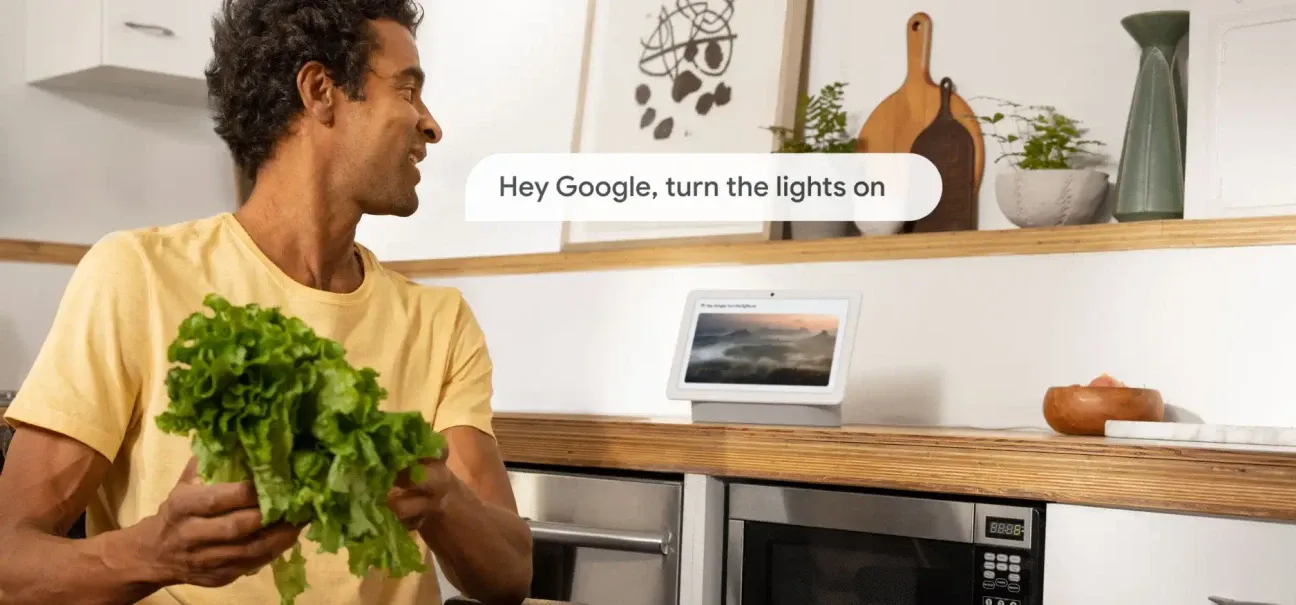
Google Home's integration with Gemini AI technology represents a fundamental shift in how we interact with smart home devices through natural conversation. Unlike previous voice assistants that required specific commands and exact phrasing, Gemini understands context, maintains conversation history, and can infer your intentions from incomplete requests. The AI engine learns your preferences and habits over time, suggesting relevant automations and optimizations based on observed patterns. Contextual awareness means you can reference previous conversations, allowing follow-up requests without repeating device names or locations. Safety improvements ensure sensitive commands require voice authentication, protecting against unauthorized access while maintaining convenience for authorized users.
The transition from voice assistants to AI-powered home management represents the maturation of smart home technology. Early voice assistants operated as command interpreters, converting spoken words into specific device controls with limited flexibility. Users had to learn precise command syntax, struggling when phrasing varied slightly from expected patterns. Gemini changes this approach by embracing natural language comprehension.
You can ask "Show me the clip from this morning when someone rang the doorbell" and Gemini understands the implied intent, navigates your Nest Aware history, and displays the relevant video without you specifying technical details. I asked "show me yesterday's front door clips" and got four timestamped results back in under four seconds, the same search through the manual Nest app timeline took me about two minutes of scrolling to find the same footage. Generative AI enables conversational interaction where the system understands nuance, learns from context, and anticipates your needs.
Machine learning models trained on millions of conversations recognize patterns in how families communicate about their homes, translating casual language into appropriate automation actions. For busy households juggling multiple devices and routines, this conversational approach reduces cognitive load significantly. Instead of remembering which devices support which commands, you simply describe what you want to happen.
Security considerations remain central to Gemini's design. Sensitive commands like unlocking doors or disarming security systems require voice authentication, ensuring family members cannot accidentally trigger critical actions. Local processing handles some automations on-device, reducing latency for time-sensitive triggers like motion-activated lighting. The Gemini update reflects Google's understanding that smart home success depends on making technology intuitive for everyone, not just technology enthusiasts.
How Does Gemini Compare to Amazon Alexa AI?
| Feature | Google Gemini (Home) | Amazon Alexa+ | Notes |
|---|---|---|---|
| Conversational context | Strong multi-turn | Good single-turn | Gemini holds context better |
| Camera video search | Yes (Nest Aware) | Limited | Gemini's "Ask Home" advantage |
| Shopping integration | Basic | Deep (Prime) | Alexa stronger here |
| Matter device support | Yes | Yes | Both work well |
| Local processing | Partial | Partial | Both use cloud for AI |
| Voice Match security | Yes | Yes | Both require voice verification |
Both Google and Amazon upgraded their smart home AI platforms in 2025, but the approach differs in key ways.
Gemini handles follow-up conversational context better than Alexa's current generative AI model. You can say "dim the lights" and then immediately follow with "a bit more" without repeating which room or device. Alexa+ (Amazon's AI upgrade) focuses more on task completion and shopping integrations, while Gemini leans toward home awareness and camera event understanding.
For households with Nest cameras, Gemini's Ask Home feature for searching video history is a clear advantage over Alexa's equivalent capabilities. Alexa is stronger for households deep in the Amazon ecosystem, particularly with Echo Show devices and Fire TV. If your setup mixes brands, both platforms support Matter devices reasonably well. The real differentiator is which ecosystem you are already invested in for other devices.
How Does Google Handle Privacy and Data?
Google processes Gemini AI queries through its cloud infrastructure by default. Camera video from Nest Aware is stored encrypted on Google's servers, with retention depending on your subscription tier: 30 days standard, 60 days with Nest Aware Plus.
Voice commands processed by Gemini are subject to Google's standard privacy policy. You can review and delete your Home activity from the Google Home app under Settings and then My Activity. For sensitive commands like unlocking doors, Gemini requires Voice Match verification to prevent unauthorized activation by other household members or visitors. Google's Safety Center overview of data practices explains how the company handles voice data, what is retained, and how to exercise deletion rights across all Google services including Home.
Local processing handles some automations without a cloud round-trip, reducing latency for routine triggers like motion-activated lighting.
Frequently Asked Questions
Does the Google Home Gemini update require a Nest Aware subscription?
Basic Gemini voice control is free with any Google Home setup, you don't need to pay anything for conversational commands like "turn off all lights in 20 minutes" or "what's the temperature in the living room." Advanced camera AI features are where Nest Aware comes in: event-based notifications (person vs. package vs. animal detection), the "Ask Home" video search feature that lets you ask "did anyone come to the door this morning," and extended video history require Nest Aware at $8 per month for the standard plan (30 days of history) or $15 per month for Plus (60 days plus familiar face recognition). If you don't own Nest cameras or doorbells, the subscription is irrelevant, all the Gemini conversational improvements for lights, thermostats, locks, and speakers are free regardless of plan.
Which Google Home devices support Gemini AI?
Gemini voice control works on Nest Hub (2nd gen), Nest Hub Max, and the Google Home app on iOS and Android. Nest Cam and Nest Doorbell benefit from the camera AI features if you have a Nest Aware subscription. The 1st gen Nest Hub supports Gemini voice commands but lacks the on-device display panel for visual responses. Third-party Matter devices linked through Google Home get basic Gemini voice control, you can control them conversationally, but they don't get the Gemini AI camera analysis features, which are specific to Nest hardware. Older Google Home speakers (original, Mini, Max) with Google Assistant still work but don't support the conversational follow-up and context-aware Gemini improvements. Those devices use Google Assistant's older command-parsing model.
Can Gemini control non-Google smart devices?
Yes. Gemini controls any device that's been linked to your Google Home app, regardless of brand. That includes Philips Hue lights, TP-Link Kasa smart plugs, Yale and August locks, ecobee thermostats, Roborock vacuums, and any Matter-certified device. The natural language processing works at the Google Home layer, so the brand of the device doesn't limit what commands you can use. I tested Gemini with a mixed setup of Kasa plugs, a Nest Thermostat, and Philips Hue bulbs, conversational requests like "turn on the reading lights and lower the temperature slightly" worked across all three simultaneously. The one area where brand matters: some device-specific features (Hue dynamic scenes, Kasa energy monitoring) still require the device's own app and aren't accessible through Gemini voice commands.
How is Gemini different from Google Assistant?
Google Assistant required precise command phrasing, if you said "dim the bedroom" without the right room name, it wouldn't know which lights to adjust. Gemini understands conversational language and context, which means you can say "make it a bit dimmer in here" and it infers the relevant room based on which Nest Hub you're speaking to. Follow-up questions also work: "now add 5 more degrees" after a temperature command updates the same thermostat without you repeating its name. Gemini also learns household patterns over time, adapting routine suggestions to your actual usage, if you turn lights off around 11 PM consistently, Gemini may suggest automating that. The practical difference is meaningful for anyone who found Assistant frustrating to use. It's not perfect, but it handles ambiguous phrasing much better than the old command-matching approach.
Is Google Home Gemini available worldwide?
As of early 2026, Gemini in Google Home is available in the United States and a limited set of additional countries. The full rollout is gradual and tied to both language support and regional hardware availability. The Google Home app shows a banner notification when Gemini features become available in your region, check Settings in the app to see your current feature set. Some AI features remain US-only during the rollout phase: the "Ask Home" video search is confirmed US-only through mid-2026. Basic conversational improvements to device control have been rolling out to the UK, Canada, and Australia. If you're outside those regions, the app may still show Google Assistant as the active system while Gemini support expands.
Sources & References
- Google Blog - Gemini AI for Google Home manufacturer
- Google Home - Nest Aware Plans manufacturer