
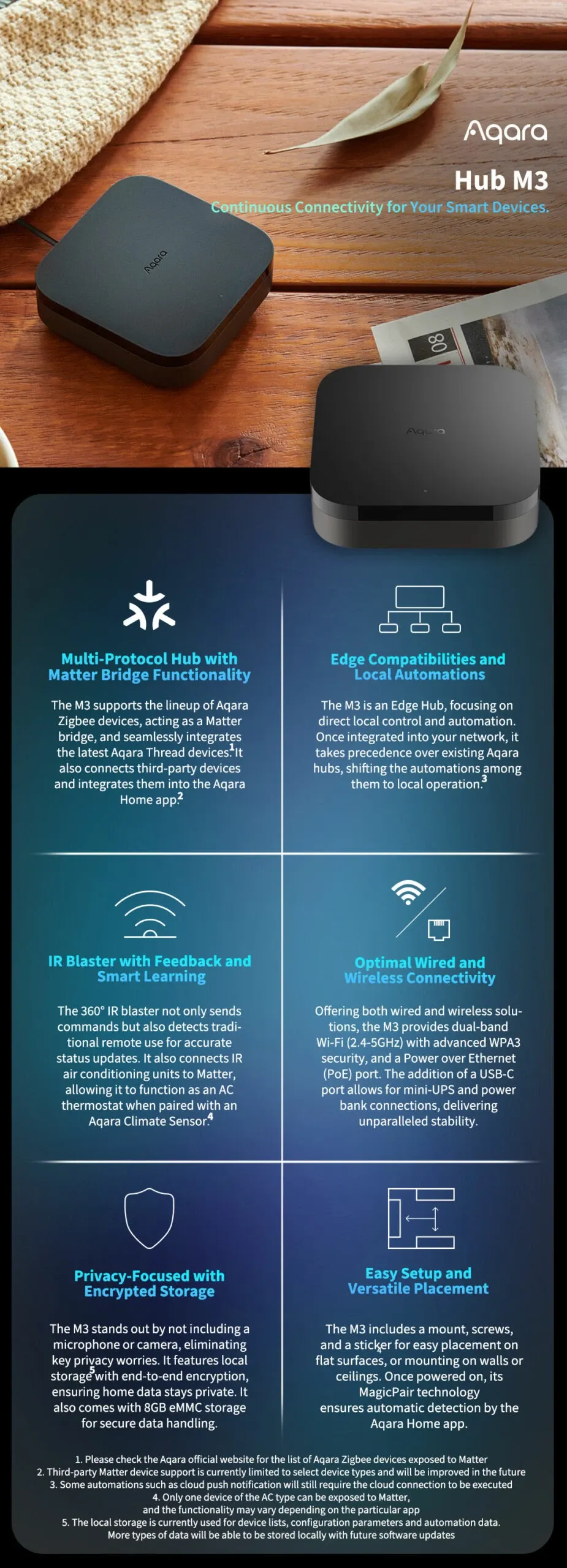
AI-Powered Detection in Smart Homes
AI detection transforms smart home security and automation by enabling devices to intelligently distinguish between different types of movement and activity. Rather than triggering alerts on every motion, AI-powered sensors recognize human presence, classify activities, and reduce false alarms caused by pets, wind, or lighting changes.
Benefits of AI Detection
AI detection provides smart homeowners with:
- Reduced false alerts from pets, vehicles, and environmental changes
- Person recognition distinguishing humans from other motion sources
- Intelligent automation responding appropriately to actual occupancy
- Enhanced security with more accurate threat detection
- Energy savings through context-aware device activation
AI detection capabilities are now standard in premium smart cameras, video doorbells, and motion sensors from leading manufacturers.
How AI Detection Works
Modern AI detection systems use machine learning algorithms trained on thousands of hours of video footage to identify human silhouettes, body positions, and behavioral patterns. The technology distinguishes between humans, animals, vehicles, and inanimate objects with remarkable accuracy. Advanced algorithms analyze movement speed, direction changes, and duration to classify whether detected motion represents a security threat or routine household activity.
These systems continuously improve their accuracy through feedback mechanisms and regular firmware updates. Early AI detection had higher false alarm rates, but recent generations achieve detection accuracy exceeding 95% in real-world conditions. The technology operates both in cloud-connected and local processing modes, allowing users to maintain privacy by processing video analysis directly on the device rather than uploading footage to remote servers.
Implementation Across Device Categories
AI detection integration varies by device type and manufacturer. Smart cameras typically offer per-zone configuration, allowing users to set different detection sensitivity levels for specific areas - high sensitivity for entry points, lower sensitivity for areas with pets or moving curtains. Video doorbells apply person detection specifically to humans approaching entrances, ignoring passing vehicles or animals. Motion sensors increasingly incorporate millimeter-wave radar combined with passive infrared sensing, enabling sophisticated presence detection distinguishing occupied spaces from empty rooms.
Practical Security Applications
AI detection enables sophisticated security automations previously impossible with traditional motion sensors. Home security systems can distinguish between legitimate residents returning home and potential intruders, triggering different automation sequences accordingly. Package delivery detection alerts homeowners specifically when people approach front doors, reducing false notifications from passing pedestrians or delivery vehicles. Perimeter monitoring systems identify humans attempting to breach property boundaries while ignoring animals and vehicles that would generate excessive false alarms with conventional motion detection.
Integration with smart lighting creates responsive security scenarios. When AI detection identifies an unknown person approaching your home during nighttime hours, the system can automatically illuminate entry areas, record higher-resolution video, and send priority notifications. During daytime, the same person detection might trigger different responses - optional notifications instead of automatic lighting activation, respecting normal daytime visitor patterns while maintaining security awareness.
Privacy and Local Processing Considerations
A critical advantage of modern AI detection is the ability to process video analysis locally on the device itself, rather than transmitting video streams to cloud servers for analysis. Local processing maintains privacy by keeping sensitive home footage within your network, eliminating concerns about video storage on third-party servers. Users can enable AI detection features without compromising privacy expectations that come with traditional security monitoring.
Different manufacturers employ varying approaches to local versus cloud processing. Some devices perform initial detection locally and only transmit alerts and small thumbnail images to the cloud. Others offer fully local processing options where all video analysis occurs on the device with cloud connectivity used only for notifications and remote viewing of stored footage. Understanding your chosen system's processing model allows informed decisions about privacy preferences and data handling practices.
Automation Possibilities with AI Detection
AI detection data integrates seamlessly with broader home automation systems. Presence detection from smart cameras can trigger lighting scenes as you approach home. Person detection from video doorbells can activate door unlock sequences for family members while requiring manual verification for unknown visitors. Environmental monitoring combined with person detection enables sophisticated climate control, activating air conditioning only when occupied zones show human presence rather than maintaining constant temperature in empty areas.
Advanced automation scenarios combine multiple AI detection sources. A comprehensive security setup might correlate person detection from front door cameras with motion sensor data from hallways and living spaces to distinguish between residents and intruders. These multi-source detection patterns trigger increasingly confident security responses - suspicious activity detected at single points generates moderate alerts, while correlated detection across multiple sensors triggers urgent notifications and recording activation.