Sonoff Smart Plug-in Unit for Home Automation

Product Details
🏭 Manufacturer: Sonoff
🔌 Plug Format: Type B
🔖 Part Number: S26
🏳️ Country of Origin: China
🆔 Model Number: S26-B
📐 Size: Compact
🎨 Style: Modern
🧲 Mounting Type: Plug-in
🔧 Usage: Indoor
🧩 Included Components: Smart Plug-in Unit, User Manual
The Sonoff Smart Plug-in Unit is the S26 family of Wi-Fi plugs: a small relay that sits between the wall and an appliance and turns it on or off from the eWeLink app, a schedule or a voice assistant. It's a basic plug. It doesn't measure power. Sonoff's own store has no S26 page anymore, so most of what's left on the market is old stock and resale listings, and this page is partly a pointer to what replaced it.
This is a researched page, not a hands-on one. The facts below come from Sonoff's current store pages and retailer listings, checked in October 2026, and where the sources disagree I say so.
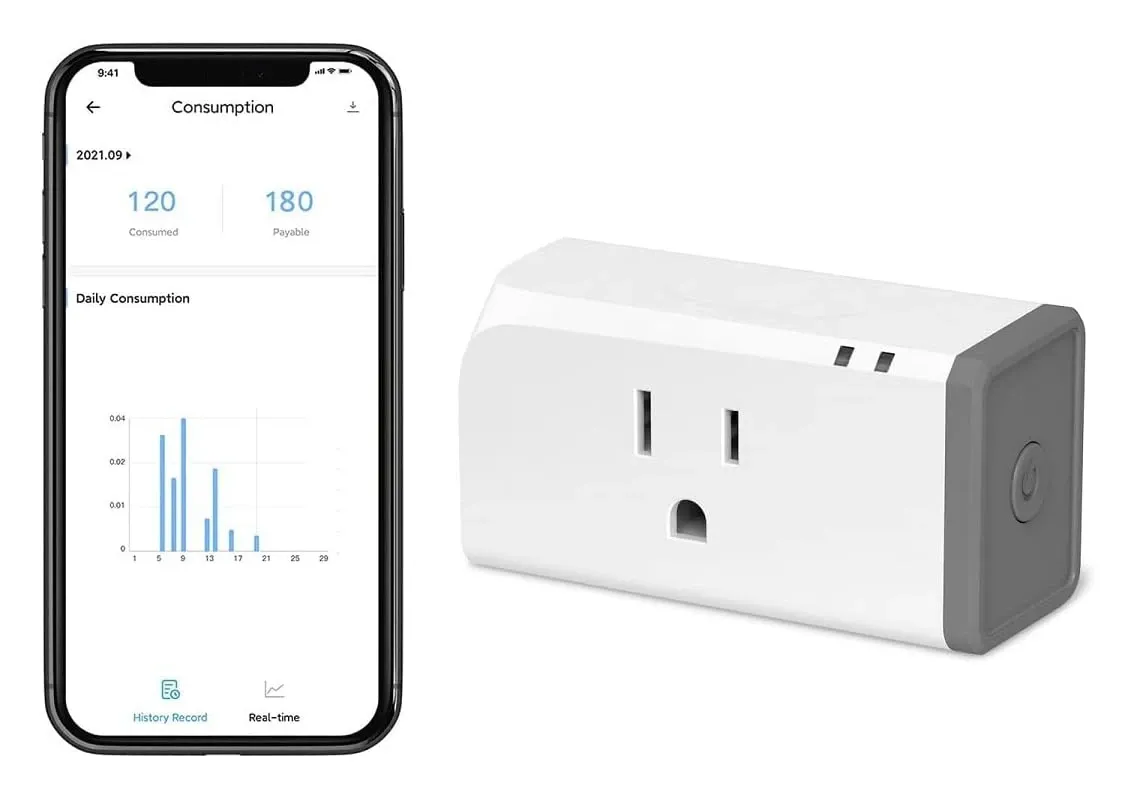
What You Get
The plug ships with a user manual and nothing else. It's a plug-and-play device: connect it to a 2.4 GHz Wi-Fi network, pair it in the eWeLink app, and the appliance behind it is controllable. There's no hub involved and no Zigbee radio. Some other Sonoff plugs do use Zigbee, but this one is Wi-Fi only.
Ratings, and Why They Conflict
Retailer listings for the S26 family don't agree. A supplier listing for the US model (S26R2TPB) quotes 10 A at 110-250 V, while European listings for the S26R2 quote 16 A and 3680 W on a 250 V input, and sizes range from about 97 to 104 mm in length depending on the seller. The regional versions differ, so read the rating printed on the plug you actually receive and don't assume the 15 A figure you see on other Sonoff pages applies. That 15 A belongs to the S31, not to this plug.
No Energy Monitoring Here
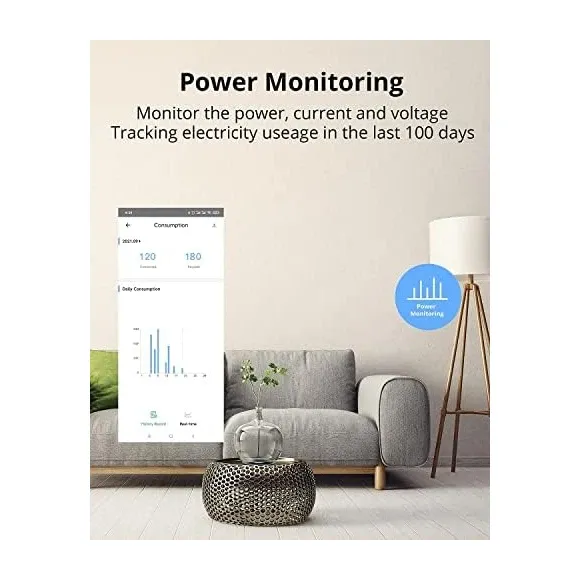
Plenty of pages mix this plug up with the Sonoff S31, so the line needs drawing clearly. Sonoff's store page for the S31 states that only the S31 supports energy monitoring, and that the S31 Lite doesn't. The S26 is a plain on/off plug. If you want to see watts, daily usage or phantom drain from always-on devices, buy a plug that meters, such as the Sonoff S31, whose US listing quotes 15 A at 120 V AC and 2.4 GHz 802.11 b/g/n.
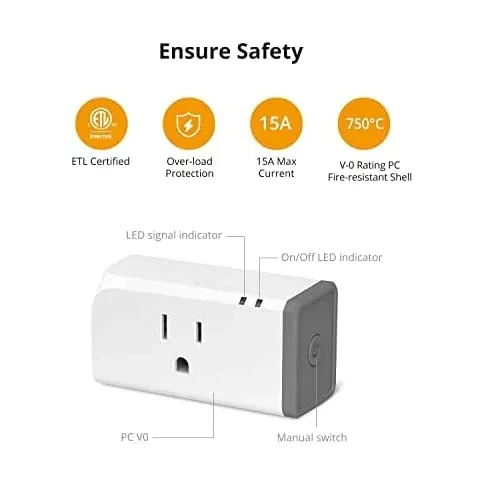
Setup
The pairing flow is short. Plug it into an outlet, install the eWeLink app, create an account, put the plug in pairing mode and follow the prompts. Keep the phone on the same 2.4 GHz network during pairing, because these ESP-based plugs don't join 5 GHz networks. If the app can't find the plug, move closer to the router for the first pairing and try again.
What the App Does
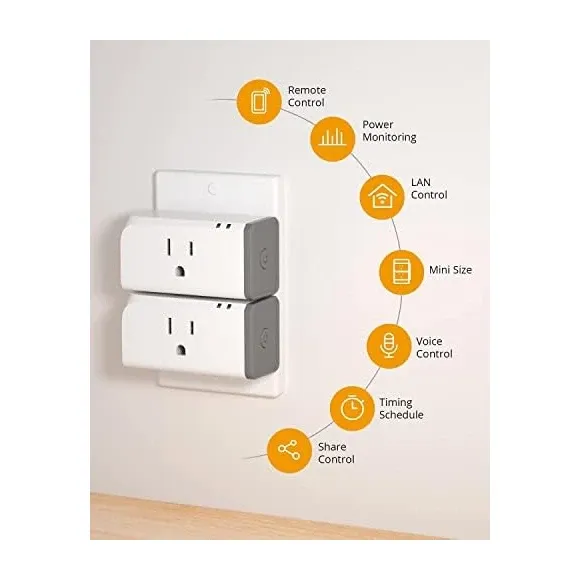
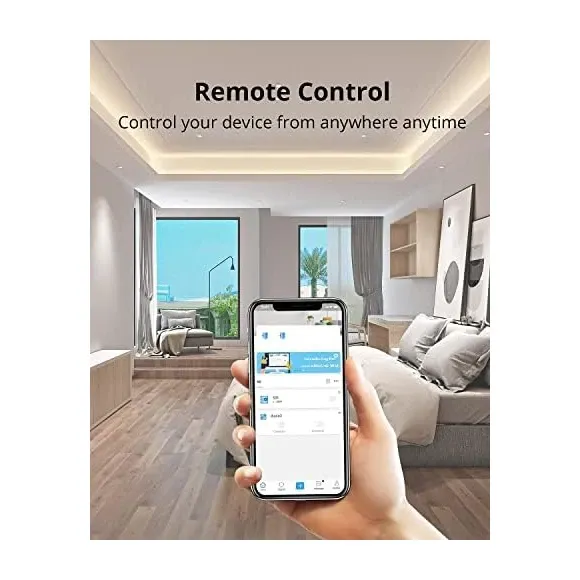
- Remote control from anywhere through the eWeLink cloud
- Voice control through Amazon Alexa and Google Home, which Sonoff lists for its Wi-Fi plugs
- Schedules, timers and countdowns, which are handy for a space heater you never want left on
- IFTTT support, listed on Sonoff's plug pages, for linking the plug to web services and other smart devices
Everything above runs through Sonoff's cloud account. That's the trade-off with Wi-Fi plugs of this generation: if the account goes, so does the history and the app control. Sonoff's newer line adds Matter. Its store says Wi-Fi devices can reach Apple Home, Google Home, Alexa, SmartThings and Home Assistant through the Matter bridge in its CUBE OS (the iHost hub), but that's extra hardware.
Where a Plain Plug Makes Sense
- Home security: put a lamp on a schedule so the house looks occupied. Learn more about how plugs fit a broader setup in our guide on smart switches and home automation.
- Coffee maker or kettle with a physical switch left on: start it from bed. Check the appliance first, because many heating appliances aren't meant to be switched by a plug relay.
- Seasonal lighting: holiday strings on a timer, on and off at set times.
- Space heaters: use a countdown rather than a permanent schedule, and stay under the plug's rating. For budget-friendly automation options, check our guide on budget smart home devices under $100.
Availability and Replacements
Sonoff's current store lists the S31, the S40 and S60 iPlug series, the S41 and S61 Matter-over-Wi-Fi plugs and Zigbee variants such as the S31 Lite ZB. The S26 isn't among them, so treat the Smart Plug-in Unit as a legacy part. For a new purchase in the US, a Matter-over-Wi-Fi iPlug or the S31 is the better starting point, depending on whether you want metering.
How It Compares With What Sonoff Sells Now
Sonoff's current store splits plugs by protocol. The S31 is Wi-Fi with metering and is listed at 15 A and 120 V for the US. The S31 Lite ZB is the Zigbee version, and the S60 and S61 families come in Wi-Fi, Zigbee and Matter-over-Wi-Fi flavours. The practical difference from the old S26 is where the plug reports to. A Zigbee plug talks to a coordinator you own, such as a Home Assistant dongle, and keeps working if the vendor account disappears. A Wi-Fi plug of the S26 generation talks to the eWeLink cloud, and the phone app is the only way to reach it unless you add a bridge.
Price is the other factor. Resale listings showed the S31 at roughly 13 to 15 USD, and Sonoff's UK store showed a sale price of 11.76 GBP in October 2026. A plain plug at that price leaves little reason to hunt for a discontinued one.
Is It Still Worth Buying?
Only if you find one cheap and you want a no-frills plug. It does one job, it works with the eWeLink app, and it won't tell you how much power anything draws. For an easy first smart plug that also meters, the S31 is still in Sonoff's catalog, though its UK store showed it sold out in October 2026. For anything you want to keep working without a vendor cloud, look at the Zigbee or Matter plugs instead.
This controller brings centralized management to your connected devices. For two outlets in one body, see the Kasa EP25 dual-outlet plug.


