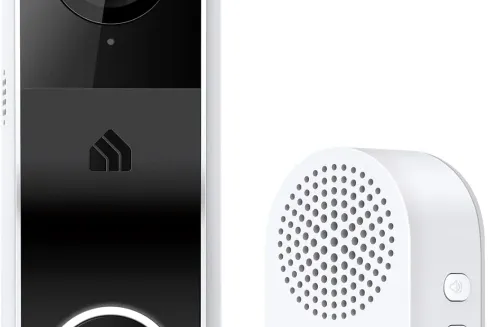
Philips Hue Secure Video Doorbell: Smart Security

Product Details
🏭 Manufacturer: Philips Hue
🔌 Plug Format: 12-24V AC Power (Transformer not included)
📄 Specification Met: IP54, Class III (safe extra-low voltage)
🔖 Part Number: 929003816504
🏋️♂️ Weight: 230 g (net)
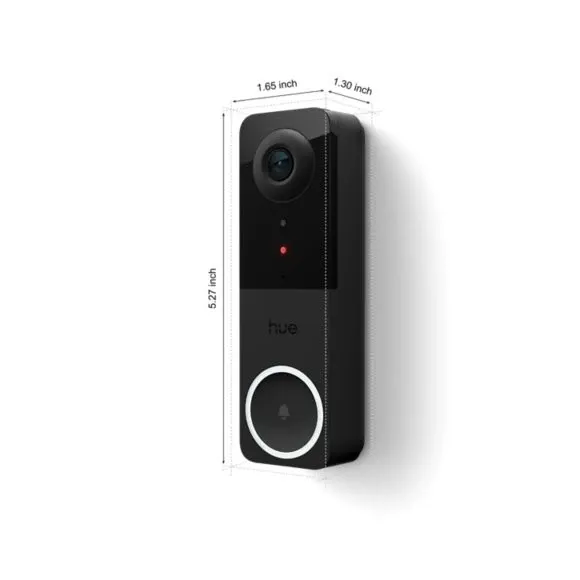
📏 Dimensions: 5.3 x 1.7 x 1.25 inches (doorbell unit)
🏳️ Country of Origin: China
🆔 Model Number: Hue Secure Wired Video Doorbell
📐 Size: Standard doorbell mount
🎨 Style: Modern wired video doorbell
🧲 Mounting Type: Wall Mount
🔧 Usage: Outdoor Use
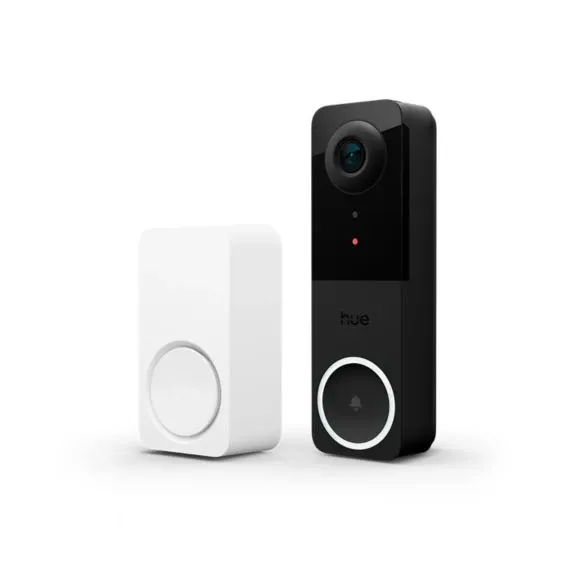
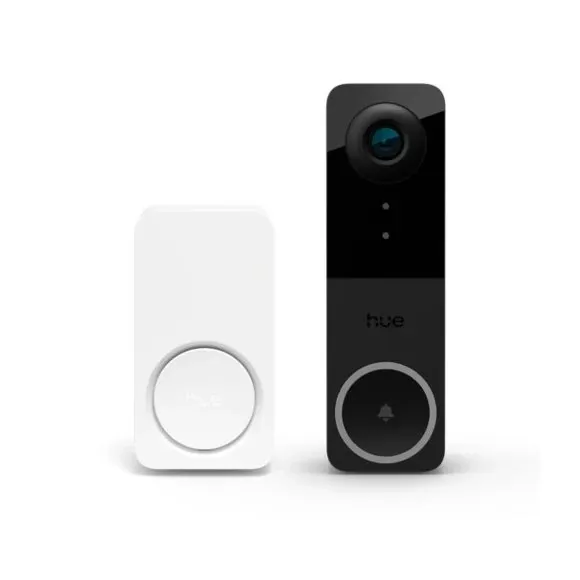
🧩 Included Components: Video doorbell and Smart Chime (12-24V AC transformer not included)
The Philips Hue Secure Video Doorbell is a wired 2K doorbell that can make your Hue lights react when someone rings or motion is detected. Philips sells it as a bundle with a Smart Chime, and its US store listed that bundle at $199.99 in October 2026. It needs an existing low-voltage doorbell circuit, so it's a swap-in for a wired doorbell rather than a stick-on gadget for renters.
What Sets It Apart From Other Doorbells
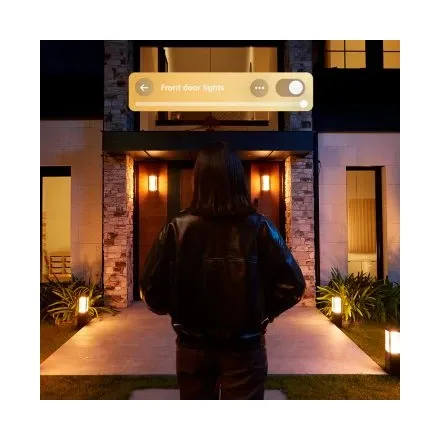
Most video doorbells live in their own app and treat your lighting as somebody else's problem. This one doesn't. Pair it with a Hue Bridge and it can flash selected lights when the button is pressed, and the same Hue app that runs your bulbs also shows the camera. That's the whole pitch, and for a house that already runs on Hue it's a fair one.
Is it the best doorbell you can buy? No. It's wired only, there's no battery backup, and the longer history costs a yearly fee. But if you want the doorbell, the chime and the porch light in one app, it's one of the few options that does it natively. I'd pick it only if you already own a Hue Bridge.
Video Quality and Night Vision
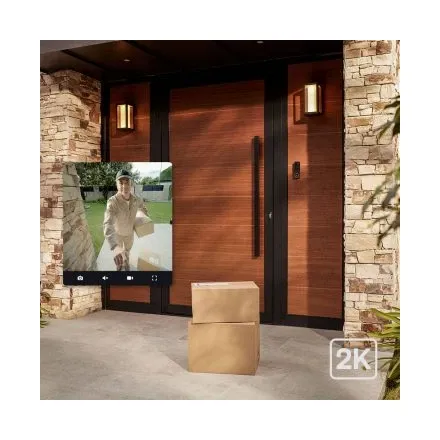
The camera records 2K QHD video at 1984 x 1984 pixels, a 1:1 square image. Philips' spec sheet lists a 193-degree field of view, while its FAQ says "more than 180 degrees". Either way, the square frame shows the porch floor as well as the visitor's face, which is where parcels end up. Digital zoom is supported.
At night the doorbell uses color night vision with an infrared LED. Philips doesn't publish a low-light lux figure, so treat "color at night" as a feature to test on your own porch, since the result depends heavily on your street lighting.
Detection, Alerts and Subscription Tiers
Philips lists motion, people and object detection for the doorbell. Vehicle and animal detection aren't listed on the doorbell's product page. The plan page does describe package zones and activity zones as paid features, so read the plan table before assuming a feature is free.
The free tier covers live streaming, instant notifications, end-to-end encryption, blackout zones, video snapshots and 24 hours of video history. Paid plans stretch that out. These are Philips' US prices from October 2026.
- Free: $0, 24 hours of history.
- Basic: $39.99 per camera per year, 30 days of history, activity zones, video clips and smarter alerts, for up to two cameras.
- Plus: $99.99 per year flat, 60 days of history, for up to ten cameras.
So the often-quoted "60-day history" isn't included. It's the Plus plan, and one doorbell on Plus costs $99.99 a year.
Security, Privacy and Power Cuts
For home security, the free tier is more generous than most: Philips lists end-to-end encryption, blackout zones that hide parts of the frame, video snapshots and instant notifications at no charge. That covers the basics of a security setup without a subscription. What it doesn't cover is history. Anything older than 24 hours needs Basic or Plus, so if you want to look back at last week's delivery, you're paying. And because the doorbell is wired with no battery backup, a power cut or a dead transformer takes the camera offline until the supply returns, which matters for a device you'd use as part of a security routine.
Two-Way Talk
You can talk to visitors through the Hue app on your phone, and the doorbell has a built-in speaker and microphone. Philips lists two-way talk but doesn't publish specs for noise suppression or echo cancellation, so I won't promise how it sounds in wind or traffic.
The Smart Chime
The bundle includes a Smart Chime, a plug-in unit that rings inside the house. Philips lists several built-in tones (custom tones can't be added), up to 10 schedule time slots that each carry their own tone and volume, and a local button to mute it. The chime's siren is rated at 87 dB. With a Hue Bridge, the doorbell can also blink connected lights when it's pressed, which helps if you're hard of hearing or wear headphones.
Connectivity and Smart Home Support
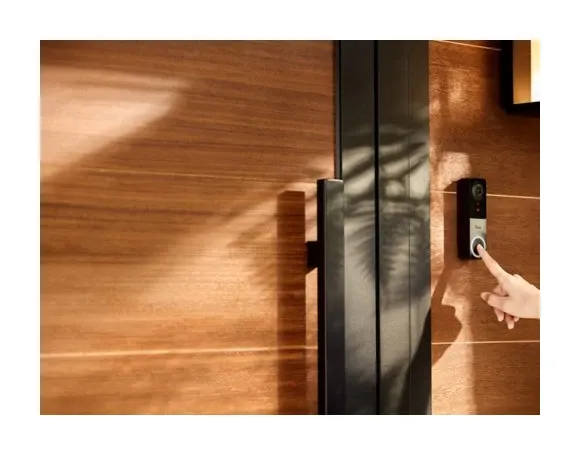
The doorbell connects over Wi-Fi (2.4 GHz and 5 GHz), Bluetooth and Zigbee, and Philips says it works without a bridge. Here's what changes with one:
- No bridge: one chime per doorbell, basic control from the Hue app.
- Hue Bridge: up to 12 chimes, light chiming and light triggers, plus Matter support.
- Bridge Pro: up to 50 chimes.
Philips lists Alexa, Google Home, Apple Home, Samsung SmartThings, IFTTT, Sonos and Matter as compatible. The phone app needs Android 10 or newer, or iOS 16 or newer.

Installation and Power
This is a wired doorbell. It needs a 12-24V AC transformer rated at 10VA or more, and the transformer isn't in the box. There's no battery backup, so a power cut means no camera. Don't connect it to mains voltage. Check the rating on your existing transformer before you buy.
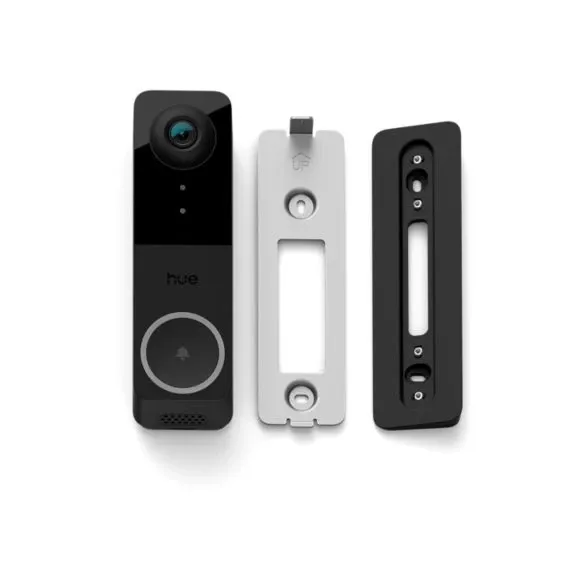
Philips gives the doorbell an IP54 rating (protected against dust ingress and splashing water) and a working temperature of -20 to 45 degrees Celsius, so a covered porch is fine and an exposed wall in a hard winter deserves a second look. The unit weighs 0.23 kg and measures about 5.3 by 1.7 by 1.25 inches. Philips lists it as Class III, meaning it runs on safe extra-low voltage.
Who Should Buy It
Buy it if you already run Hue bulbs and a bridge, want one app for lights and doorbell, and can live with a wired install. Skip it if you rent, if you want a battery doorbell, or if you want months of free history. A battery doorbell from another brand is the better fit for those cases.
The numbers here come from Philips' own product and plan pages as of October 2026, cross-checked against retailer listings and reviews rather than months of living with the doorbell. If you've mounted one, your wiring and Wi-Fi range will tell you more than a spec sheet does.
Frequently Asked Questions
Does the Philips Hue Video Doorbell require a subscription?
No. Live view, two-way talk, instant notifications and 24 hours of video history are free. Philips sells two paid plans for longer history: Basic keeps 30 days and adds activity zones and video clips ($39.99 per camera per year, up to two cameras), and Plus keeps 60 days for up to ten cameras ($99.99 per year). Prices are from Philips' US plan page in October 2026, so check them before you buy.
Does the Philips Hue Video Doorbell require a Hue Bridge?
No, the doorbell works without a bridge, over Wi-Fi and Bluetooth with the Hue app. A Hue Bridge is recommended for the features that tie it to your lights, such as flashing lights when someone rings. It also raises the chime limit from one chime per doorbell to up to 12 with a Bridge and up to 50 with a Bridge Pro. Philips lists Matter support through the Hue Bridge.
What is the video resolution and field of view?
The camera shoots 2K QHD video at 1984 x 1984 pixels (1:1 ratio). The spec sheet gives a 193-degree field of view, and Philips' FAQ describes it as more than 180 degrees. Night vision is color night vision with an infrared LED.
Does the Philips Hue Video Doorbell work with Alexa and Google Home?
Philips lists Alexa, Google Home, Apple Home, Samsung SmartThings, IFTTT, Sonos and Matter as compatible. The doorbell connects over Wi-Fi (2.4 GHz and 5 GHz), Bluetooth and Zigbee. It has no battery backup, so it needs its 12-24V AC doorbell transformer (minimum 10VA).