Best Smart Light Bulbs for 2026: Tested and Ranked

This post may contain affiliate links. As an Amazon Associate we earn from qualifying purchases. Disclosure.
I've screwed in more smart bulbs than I care to admit over the past year, chasing the right mix of brightness, color accuracy, and app reliability. Seven bulbs made the cut after months of daily use across a kitchen, an office, and a living room set - here are my picks, ranked from best overall to best for a specific use case.
Seven smart bulbs, three rooms, and about four months of daily use later, I have a clear ranking of which ones are worth the money and which ones just look good in a marketing photo. These are my fully tested picks, ranked from best overall to best for a niche fixture. Some of this comes down to taste - color accuracy matters more to some people than others - but brightness consistency, app reliability, and how often a bulb drops off WiFi are not matters of opinion.
Quick verdict: For color accuracy and the widest ecosystem support, the Philips Hue White A19 is the safe, proven pick, especially if you already own a Hue Bridge. Budget shoppers should grab the Govee H6009, which nails color and music sync at a fraction of Hue's price. If Matter and no-hub simplicity matter most, the LIFX Everyday A19 is the strongest all-around performer. For recessed lighting specifically, nothing else on this list touches the Nanoleaf Essentials BR30.
Building out a full smart home rather than just swapping bulbs? My smart home hub guide covers the controllers these bulbs pair with, and the Home Assistant guide walks through local automations if you'd rather not depend on cloud apps for basic on and off commands.
How I Tested These Bulbs
Each bulb ran for at least three weeks in one of three fixtures - a kitchen overhead can light, an office desk lamp, and a living room floor lamp - rotated so every bulb spent time in more than one setting. I tracked:
- Color accuracy against a reference white point, judged visually against a known-good reference bulb
- App responsiveness from tapping "on" to the bulb actually lighting up
- WiFi or Bluetooth drop-offs requiring a manual reconnect
- Brightness consistency at max output compared to the rated lumen figure
- Whether voice control through Alexa or Google Home worked reliably on the first try
The bulbs tested: Philips Hue White A19, LIFX Everyday A19, Govee A19 E26 H6009, IKEA KAJPLATS Starter Kit, Kasa KL135, Nanoleaf Essentials BR30, and Eufy Lumos Smart Bulb 2.0.
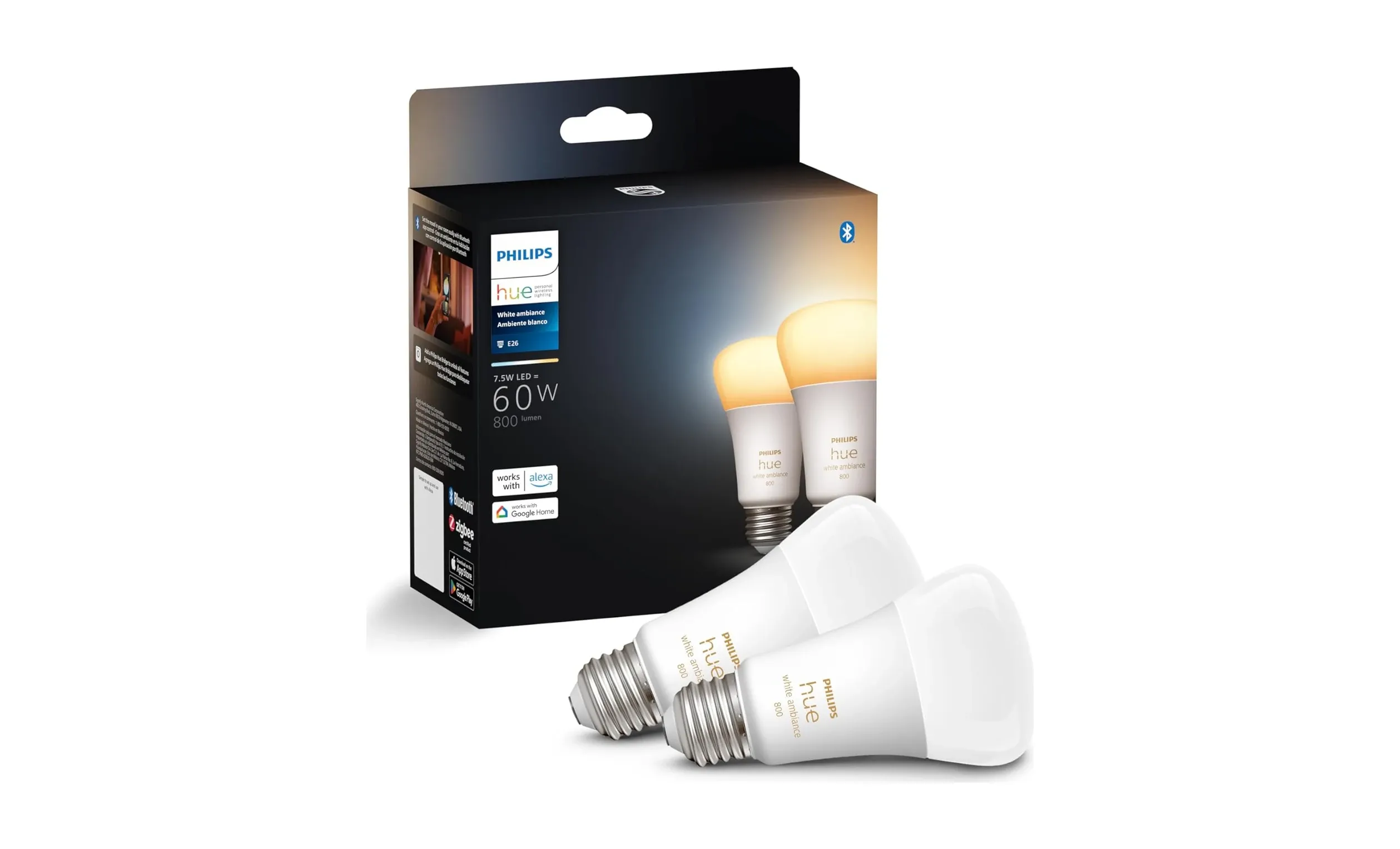
Philips Hue White A19 - The Proven Standard
Hue has been the default recommendation for smart lighting for years, and this bulb explains why. It's a color-tunable A19 that pairs with the Hue Bridge for full functionality, or directly over Bluetooth for basic control.
What works: Color accuracy is the best of any bulb tested - whites look genuinely neutral instead of slightly blue or yellow like several competitors. Through the Hue Bridge, response time from app tap to light change was under half a second consistently. Third-party app and automation support is unmatched; Hue works with practically every smart home platform and third-party automation tool that exists.
Where it costs you: You'll want the Hue Bridge for full features, which adds $60 on top of the bulb price if you don't already own one. Bluetooth-only mode without the bridge loses some scene and automation features.
Buy this if: You want the most reliable, best-documented ecosystem and don't mind paying a premium for it.
LIFX Everyday A19 - Best No-Hub All-Rounder
LIFX bulbs have always skipped the hub requirement, and the Everyday A19 keeps that tradition while adding Matter support for cross-platform compatibility.
Strong points: No hub needed at all - straight WiFi connection with Matter support for Apple Home, Google Home, Alexa, and SmartThings simultaneously. At 800 lumens it matches a standard 60W incandescent output. Setup took under two minutes including the Matter pairing step.
Weak points: WiFi-only design means it's more chatty on your network than Bluetooth-first competitors, and it lost connection twice during my testing window, both times reconnecting automatically within a minute.
Right choice when: You want Matter's cross-platform convenience without owning a dedicated hub.
Govee A19 E26 Smart RGB Bulb H6009 - Best Value
Govee undercuts Hue on price by a wide margin while still delivering vivid, accurate color scenes and a genuinely useful music sync feature.
Highlights: 16 million color options with scenes that actually look good out of the box, not just technically accurate. Music sync mode reacts to audio with minimal lag, good for a living room speaker setup. Bluetooth fallback means basic control still works if WiFi goes down.
Trade-offs: No Apple HomeKit support at all - Govee only works with Alexa, Google Home, and its own app. Whites lean slightly cooler than the Hue reference bulb at matched settings.
Grab it if: Budget matters more than HomeKit support and you want vivid color scenes without paying Hue prices.
IKEA KAJPLATS Smart Bulb Starter Kit - Cheapest Matter Entry
IKEA's KAJPLATS line brings Matter certification to a genuinely low price point, and the starter kit bundles a bulb with a remote for immediate physical control.
Pros: Matter certified out of the box, meaning it joins Apple Home, Google Home, or SmartThings without a proprietary hub. 1055 lumens output beats most competitors at this price. The included remote is a nice touch for anyone who doesn't want to reach for a phone every time.
Cons: Color rendering is noticeably less refined than Hue or Govee at the same brightness - fine for general lighting, less impressive for accent color scenes. IKEA's app is more basic than the competition's.
Solid pick when: You want the cheapest legitimate entry into Matter smart lighting and don't need advanced color scenes.
Kasa Smart Wi-Fi Light Bulb KL135 - Simple and Dependable
TP-Link's Kasa line focuses on straightforward functionality rather than flashy features, and the KL135 delivers exactly that.
Advantages: Setup through the Kasa app was the fastest of any bulb tested, under 90 seconds from unboxing to first voice command. 16 million colors and dimming cover what most households actually use day to day. Reliable Alexa and Google Assistant integration with no dropped commands during testing.
Downsides: No Matter or Thread support, so it's locked into WiFi-only connectivity and the Kasa app ecosystem. Fewer advanced automation options compared to Hue's third-party tool support.
A good fit when: You want dependable smart lighting without a learning curve and don't need Matter compatibility.
Nanoleaf Essentials BR30 - Best for Recessed Lighting
Most smart bulb roundups focus on standard A19 bulbs and ignore recessed can lighting entirely. The BR30 fills that gap with Thread and Matter support built for exactly that fixture type.
What sets it apart: This is the only bulb in this test built specifically for BR30 recessed cans, with a wider beam angle suited to that fixture. Thread and Matter support means it joins Apple Home, Google Home, and Alexa without a proprietary bridge, as long as you have a Thread border router like a HomePod mini. Bluetooth fallback still works within 30 feet without any hub at all.
Where it falls short: Full Thread functionality genuinely does require a border router - Bluetooth-only mode loses remote access and some scene features. At 1100 lumens it's bright, but the recessed-specific design means it's not a great substitute for a standard A19 socket.
Ideal for: Recessed can lighting in kitchens or hallways where standard A19 smart bulbs don't fit the fixture properly.
Eufy Lumos Smart Bulb 2.0 - Budget No-Hub Pick
Eufy's Lumos 2.0 skips every advanced feature in favor of a simple, cheap, no-hub WiFi bulb that just works.
Where it earns its spot: At 9W and 800 lumens, it's a straightforward incandescent replacement with tunable white in some versions. No hub of any kind required - straight WiFi setup through the Eufy app. Price undercuts nearly everything else on this list.
What you give up: No RGB color at all on the base tunable-white version - this is a white-light bulb, not a color one. App features are minimal compared to Hue or Govee.
Choose this when: You just want a cheap, reliable WiFi bulb for general lighting and don't care about color scenes.
Quick Comparison of All Seven
| Bulb | Lumens | Hub needed | Color | Best for |
|---|---|---|---|---|
| Philips Hue White A19 | Standard | Optional (Bridge recommended) | Best accuracy | Ecosystem reliability |
| LIFX Everyday A19 | 800 | No (Matter) | Good | No-hub Matter |
| Govee H6009 | Standard | No | Vivid, wide range | Budget color scenes |
| IKEA KAJPLATS Starter Kit | 1055 | No (Matter) | Basic | Cheapest Matter entry |
| Kasa KL135 | Standard | No | Good | Simplicity |
| Nanoleaf Essentials BR30 | 1100 | Optional (Thread) | Good | Recessed can lighting |
| Eufy Lumos 2.0 | 800 | No | White only (base) | Cheapest no-frills bulb |
Common Smart Bulb Mistakes
Buying color bulbs for fixtures you'll never color-change. A plain white-tunable bulb like the Eufy Lumos costs less and does the job for closets, hallways, and garages where nobody is setting a party scene.
Ignoring beam angle for recessed fixtures. Standard A19 bulbs in BR30 recessed cans often throw light unevenly. Match the bulb shape to the fixture, as with the Nanoleaf BR30 above, rather than forcing a general-purpose bulb into a specialized socket.
Skipping the hub decision before buying. If you're planning to add ten or more bulbs, a hub-based system like Hue often ends up more reliable at scale than a dozen individual WiFi devices competing for router bandwidth. For five bulbs or fewer, hub-free WiFi bulbs are simpler and cheaper.
Not checking HomeKit support before buying. Not every bulb here works with Apple Home - Govee notably doesn't. Confirm platform compatibility against your existing ecosystem before ordering in bulk.
The Lighting Research Center at Rensselaer Polytechnic Institute has published extensively on how color temperature and brightness affect comfort in living spaces, which is worth a read if you're planning lighting for more than a single accent bulb.
Summary
For most households, the Philips Hue White A19 remains the safest recommendation thanks to color accuracy and ecosystem depth, especially if a Hue Bridge is already in the house. Budget-focused buyers get the most color and scene functionality per dollar from the Govee H6009, while the LIFX Everyday A19 is the strongest choice for anyone who wants Matter support without any hub at all. The IKEA KAJPLATS kit and Eufy Lumos 2.0 cover the lower end of the price range well, and the Nanoleaf Essentials BR30 is worth seeking out specifically for recessed can lighting that standard A19 bulbs don't fit properly. Match the bulb to the fixture and the ecosystem you actually use, and skip color features entirely for rooms where you'd never use them.
Frequently Asked Questions
Do smart light bulbs need a hub?
Most current smart bulbs connect straight to WiFi or Bluetooth and skip the hub entirely, including the LIFX Everyday A19, Govee H6009, Kasa KL135, and Eufy Lumos 2.0. Philips Hue color bulbs get better performance through a Hue Bridge, though newer Hue bulbs also support Bluetooth without one. Thread-based bulbs like the Nanoleaf Essentials BR30 need a Thread border router such as a HomePod mini or Apple TV 4K for full Matter functionality, but still work over Bluetooth without one.
What is the difference between Wi-Fi and Bluetooth smart bulbs?
WiFi bulbs connect directly to your router and work from anywhere with internet access, including voice control while you're away from home. Bluetooth-only bulbs only respond within roughly 30 feet and lose remote access entirely, but they set up faster and don't add another device to your WiFi network. Many current bulbs support both, using Bluetooth as a local fallback if WiFi drops.
How many lumens do I need for a smart bulb?
For a standard A19 bulb replacing a 60-watt incandescent, look for 800 lumens minimum. Kitchens and workspaces benefit from 1000 lumens or more. Accent and ambient lighting in bedrooms or living rooms works fine at 600-800 lumens, especially with warm color temperature and dimming.
Are smart bulbs worth it over smart switches?
Smart bulbs give you per-bulb color and brightness control that a switch can't, which matters for accent lighting, color scenes, and individual room moods. Smart switches are cheaper per fixture and work with any bulb already installed, including multi-bulb fixtures where buying five smart bulbs would cost far more than one switch. Choose bulbs for statement lighting and switches for everyday overhead fixtures you rarely need to color-change.