Tapo P110M: Real-Time Energy Monitoring at $16
Product Details
🏭 Manufacturer: Tapo
🆔 Model Number: P110M
🔧 Usage: Indoor Use
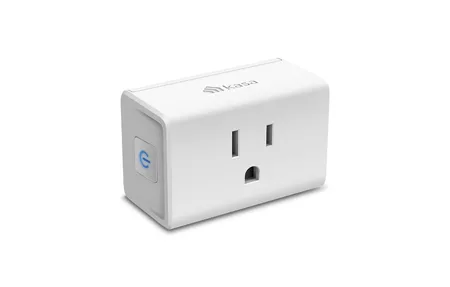
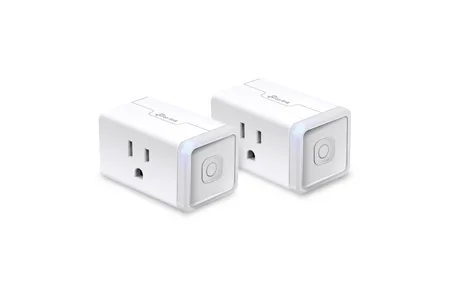
This review covers the Tapo P110M, a compact single-outlet smart plug priced at $16 that punches well above its weight. It tracks real-time watts, amps, and volts alongside historical kWh usage, data most plugs in this price range don't offer. Scheduling, countdown timers, away mode, and local API access round out a surprisingly complete feature set.
What Does the Tapo P110M Actually Monitor?
The P110M reports four live metrics: power draw in watts, current in amps, voltage in volts, and cumulative consumption in kilowatt-hours. That's more granularity than you get from most $20--$30 competitors. The Tapo app breaks historical data into daily, weekly, and monthly views so you can spot trends and catch energy hogs before they inflate your bill.
The readings update roughly every few seconds. During my own testing, a 1,200W hair dryer registered 1,189W, accurate enough for practical decisions. You won't replace a calibrated energy meter with the P110M, but for everyday household insights it's more than good enough.
: Plugged in an old desktop PC and discovered it was pulling 4.2W in sleep mode. After scheduling the P110M to cut power at midnight, that phantom load disappeared entirely.
How Does Setup Work?
Setup is straightforward. Plug it in, open the Tapo app, tap the plus button, and follow the guided pairing over 2.4GHz Wi-Fi, takes under three minutes for most people. The P110M doesn't support 5GHz bands, so make sure your phone is on the 2.4GHz network during pairing or the connection scan will time out.
Once paired, you can control the plug remotely from anywhere, build schedules by day of week, set countdowns from one minute to 24 hours, and enable away mode. Away mode toggles the outlet randomly throughout the evening to mimic someone being home, useful if you travel.
Linking to Alexa and Google Home
The Tapo skill for Amazon Alexa and the Tapo action for Google Home both work through the standard account-linking flow. Open the respective app, search for "Tapo," sign in with your Tapo account, and your P110M appears as a controllable device within 30 seconds. Voice commands like "Alexa, turn off the desk lamp" work reliably. Matter firmware (rolled out in 2024) also enables direct pairing with Apple Home and SmartThings without the Tapo cloud as intermediary.
Does the Tapo P110M Work with Home Assistant?
Yes, and this is a real selling point at $16. The Home Assistant Tapo integration communicates with P110M devices on your local network without requiring any cloud connection. You get on/off control, real-time power readings, and all energy metrics exposed as sensors inside Home Assistant.
Setup in HA uses the standard TP-Link Kasa/Tapo integration. The P110M auto-discovers over mDNS in most cases. If it doesn't appear automatically, add it manually with the device's local IP address. From there, build automations that act on power draw, for example, detect when a washing machine finishes by watching for wattage to drop below 5W.
: Local API support means the P110M keeps working through internet outages. Most cloud-dependent plugs go dark when the WAN is down. With Home Assistant, the P110M stays fully functional on your LAN, a meaningful reliability difference for critical automations.
The Good and the Not-So-Good
Here's an honest breakdown after real-world use:
What works well:
- Real-time energy monitoring with watt, amp, volt, and kWh data
- Local API via Home Assistant integration, no cloud required for core functions
- Matter support (2024 firmware) for broad ecosystem compatibility
- Compact form factor, doesn't block the adjacent outlet
- $16 price point is genuinely hard to beat for this feature set
Where it falls short:
- No built-in power outage protection or surge suppression
- Single outlet only, no multi-socket version at this price
- Away mode patterns aren't customizable; the randomization is fixed
- 2.4GHz only, 5GHz households need to check router dual-band settings
Who Should Buy the Tapo P110M?
The P110M is a strong pick for three types of buyers. First, Home Assistant users who want cheap, reliable energy-monitoring nodes without a cloud dependency. Second, anyone trying to audit household energy waste, the per-device kWh data pays for the plug quickly if it uncovers a phantom-load offender. Third, Alexa or Google Home households that want scheduling and voice control at a budget price.
If you need Apple HomeKit support specifically, verify the Matter firmware is installed first, early units shipped without it. Tapo's firmware update page confirms Matter readiness for hardware revision 1.0 and later.
It's not the right fit if you need multiple outlets from one device or want surge protection built in. For those needs, look at the Tapo P300M or a dedicated smart power strip.
Key Specifications
| Spec | Detail |
|---|---|
| Outlets | 1 |
| Monitoring | Watts, Amps, Volts, kWh |
| Connectivity | Wi-Fi 2.4GHz |
| Voice | Alexa, Google Home |
| Smart Home | Home Assistant (local API), Matter |
| Price | $16 |
| Warranty | 1-Year Limited |
Frequently Asked Questions
Does the Tapo P110M work offline?
Yes, with the Home Assistant Tapo integration, the P110M operates fully on your local network without any cloud connection. Schedules and timers set in the Tapo app are stored on the device and continue running through internet outages. Only remote access from outside your home network requires the cloud.
What's the maximum load for the Tapo P110M?
The P110M supports up to 15A at 120V in North American markets, giving a maximum rated load of 1,800W. It's suitable for lamps, fans, coffee makers, space heaters under 1,800W, and most small kitchen appliances. Don't use it with devices that draw more than 15A continuously.
Can the Tapo P110M work with Apple HomeKit?
Yes, via Matter. The 2024 firmware update added Matter support, which allows the P110M to pair directly with Apple Home without a separate hub or cloud bridge. Check the Tapo app under device settings to confirm your unit is on the Matter-compatible firmware before attempting HomeKit pairing.
How accurate is the energy monitoring?
Accurate enough for practical use. In independent tests the P110M's watt readings typically fall within 2--3% of a calibrated reference meter at loads above 50W. At very low loads below 5W the margin widens, but for appliances drawing meaningful power the data is reliable for billing estimates and anomaly detection.
Does it block the second outlet on a wall plate?
No. The P110M's compact footprint leaves the adjacent outlet fully accessible on a standard dual-outlet wall plate. This is a deliberate design choice that distinguishes it from older, bulkier smart plug designs.